Can Market Diversification Reduce Indonesia's Palm Oil Export Dependency?
Market diversification is considered capable of helping reduce Indonesia's palm oil export dependency on certain markets, including the European Union. However, this strategy should not only be implemented by expanding export destination countries. Indonesia also needs to strengthen palm oil diplomacy to anticipate trade barriers from the outset, not just respond when disputes have already occurred.
In export trade, market diversification means expanding sales destinations to more countries or regions, so exports are not overly dependent on one main market. With a more diverse market, the risks from policy changes, demand declines, or trade barriers in one region can be mitigated because there are other markets that can absorb the products.
The Palm Oil Agribusiness Strategic Policy Institute (PASPI) believes that palm oil diplomacy needs to be conducted more proactively as part of market intelligence. PASPI Executive Director, Tungkot Sipayung, stated that the success of diplomacy is not only measured by the ability to resolve trade disputes but also by the ability to prevent the emergence of policies that harm the national palm oil industry, as quoted by Kontan on Monday, July 20, 2026.
According to PASPI, the export market diversification carried out by Indonesia in recent years has helped reduce dependency on traditional markets, especially the European Union. Tungkot mentioned that the European Union's share as a destination for Indonesia's palm oil exports is now in the range of 8–10 percent. With a broader market distribution, pressure from one region is no longer seen as fully determining the performance of Indonesia's palm oil exports.
Data from the Central Statistics Agency (BPS) also shows that Indonesia's palm oil exports are spread across various main destination countries. In the table of palm oil exports by main destination countries from 2012–2024, BPS recorded India, China, Pakistan, Bangladesh, and the United States as part of the important markets for Indonesia's palm oil exports.
Nevertheless, market diversification does not mean Indonesia can ignore the European Union. The Palm Oil Fund Management Agency (BPDP) notes that the European Union remains one of the traditional markets for Indonesia's palm oil exports, with an export share of 11.8 percent during the 2020–2024 period based on ITC Trademap.
Moreover, the European market remains important because various sustainability and traceability requirements developing in the region often serve as references in global trade. BPDP also notes that the European Union has long imposed several non-tariff barriers on palm oil and its derivative products, ranging from RED II-ILUC to EUDR.
On the other hand, the government, through the Palm Oil Fund Management Agency, continues to promote palm oil diplomacy at the international level. These efforts are carried out by strengthening relationships with importing countries, trade missions, advocacy against discriminatory policies, positive campaigns, and support for international palm oil forums.
Therefore, market diversification can indeed help reduce palm oil export dependency on the European Union, but it cannot stand alone. This strategy needs to be accompanied by trade diplomacy, strengthening sustainability standards, traceability, and improving production practices domestically.
With this approach, Indonesian palm oil not only has a broader market but also a stronger bargaining position in facing changes in global trade regulations.
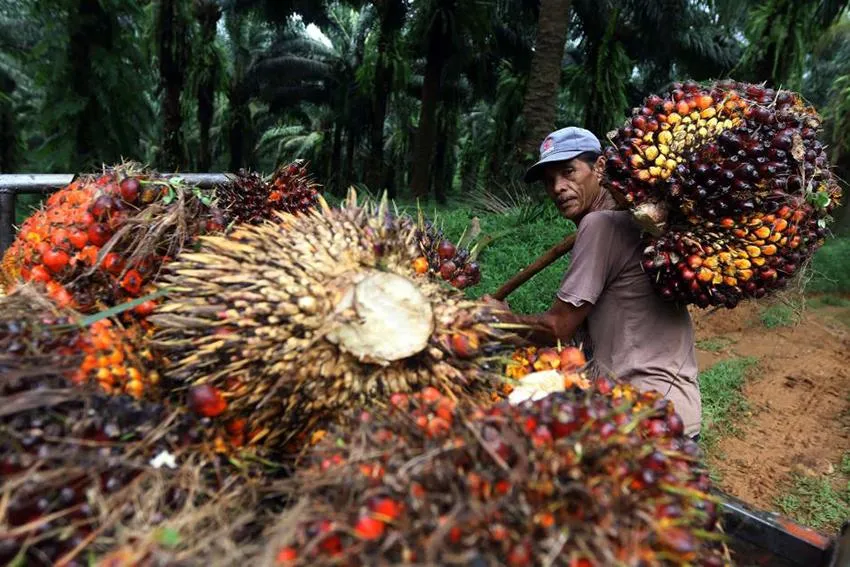
Photo: Sawitindonesia.com