← News
December 30, 2024258 views
Accelerating Indonesian Palm Oil Research
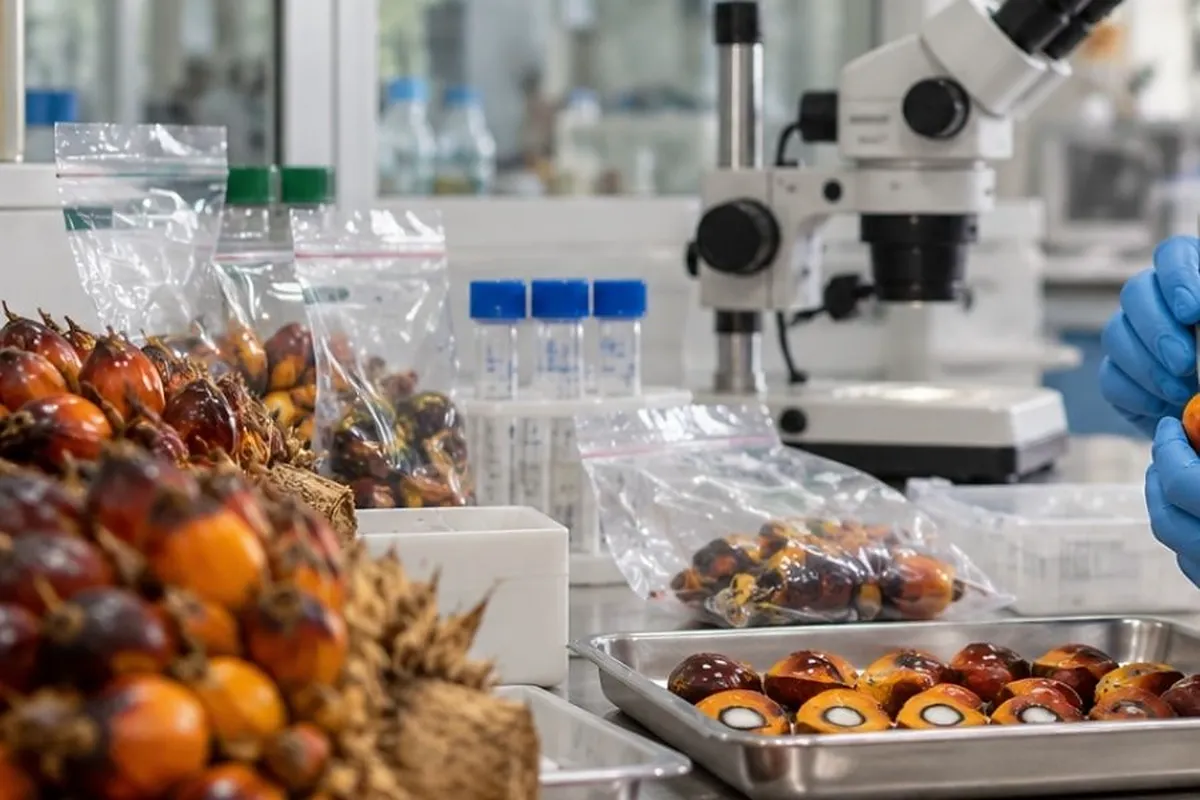
Research and innovation in oil palm in Indonesia have been developing quite rapidly. Almost every year, new products are created with various advantages. Bulletproof vests, textiles, road marking paint, and even cement are all made from palm waste materials. The development of these palm oil products is driven by the Grant Riset Sawit (GRS) program initiated by the government since 2015.
Recently, the agribusiness news line has been abuzz with discussions about researchers from Universitas Pancasila (UP) who received a research grant for palm oil cement. The research proposal by Prof. Jonbi, a lecturer in the Mechanical Engineering Study Program at UP, titled "Palm Oil Cement: Formulation of Cement Based on Palm Oil Mill Boiler Combustion Waste for a Circular Economy," was one of the 52 proposals selected by the Palm Oil Plantation Fund Management Agency (BPDP), the organizer of the GRS program.
According to elais.co (December 21), through his research, Prof. Jonbi aims to contribute to minimizing social and environmental damage while promoting a circular economy by utilizing combustion waste in palm oil mills. He received a research grant of IDR 750 million, with the projected results of his research to be produced in 2025.
Such a tradition of scholarship leading to innovation is a positive sign for the nation's progress. A country that is serious about developing research and innovation tends to be more adaptive to change and better prepared to face future challenges. Both are key elements in creating a prosperous and sustainable society. Developed countries like South Korea, Germany, and the United States prioritize research and technology in their development agendas.
The GRS program, which significantly contributes to the advancement of the national palm oil industry, deserves appreciation. Research results supported by BPDP have helped introduce new technologies and methods for processing palm waste into renewable energy. Through GRS, Indonesia can also strengthen its position as a leading global palm oil producer that prioritizes sustainability and social responsibility in its management.
However, the GRS program often faces the issue of many research outcomes stopping at the research stage and not progressing to actual implementation. Some research produces highly potential findings, such as technological innovations or new palm oil derivative products, but lacks strategic plans for adoption by businesses or the community. This occurs partly due to the suboptimal synergy between research institutions, the government, and the private sector.
To ensure that research results do not end as mere academic reports without real impact, the country needs to engage more with the industry to support research implementation. Without concrete steps to bridge the existing gap, government-funded research risks not contributing maximally to the goals of sustainable palm oil industry development.