Indonesia Strengthens ASEAN's Role in Sustainable Aviation Fuel Development
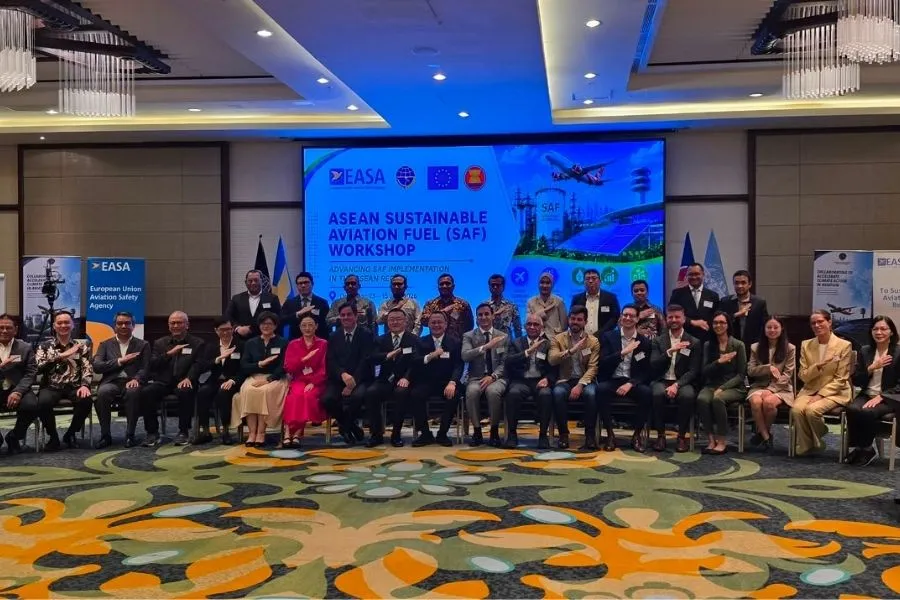
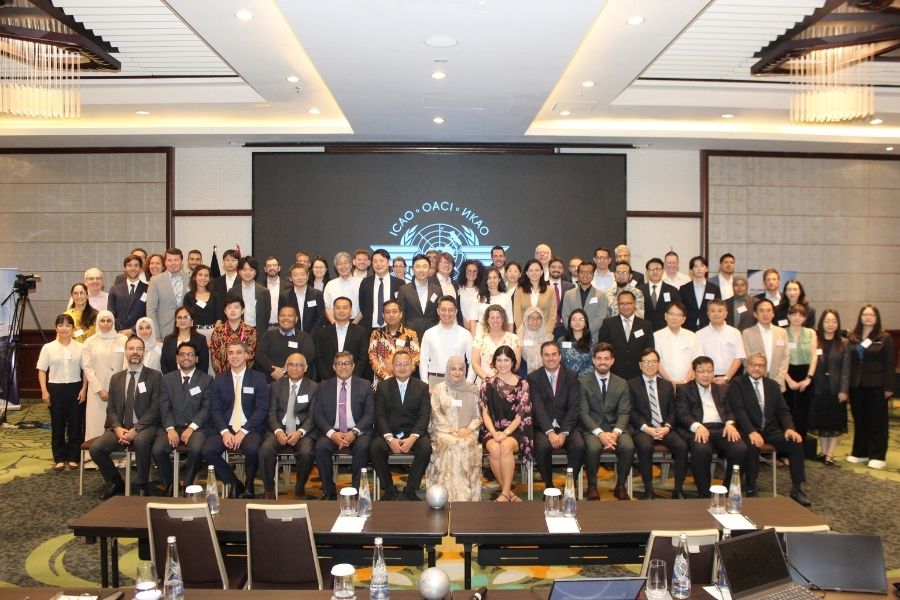
Indonesia once again demonstrated its active role in the international aviation decarbonization agenda by hosting the ASEAN Sustainable Aviation Fuel Workshop: Advancing SAF Implementation in the ASEAN Region in Bali on July 13–15, 2026. This event was organized by the Directorate General of Civil Aviation in collaboration with the European Union Aviation Safety Agency (EASA), involving ICAO Asia-Pacific and various stakeholders from aviation, energy, industry, and research institutions. The workshop took place following the Working Group 5 Committee on Aviation Environmental Protection ICAO (CAEP WG5) meeting, also held in Bali on July 6–10, 2026.
This series of forums indicates that Indonesia is beginning to take a more strategic position in the discussion of Sustainable Aviation Fuel (SAF), not only as a country with significant raw material potential but also as an active party in building technical foundations, methodologies, and scientific diplomacy. The Indonesian government encourages ASEAN not only to be a market for SAF produced in other regions but to develop as a producing region with supply chains, technology, and industrial capacity built from the region's own resource characteristics.
ASEAN has important assets to move in this direction. Indonesia, Malaysia, Thailand, and Vietnam have significant raw material potential, while Singapore and several other ASEAN countries have technological capabilities, financial capacity, and investment access. If these strengths can be connected, ASEAN has the opportunity to become one of the world's SAF growth centers. However, this opportunity requires cross-country and cross-sector collaboration, involving governments, energy producers, technology providers, financial institutions, the aviation industry, research institutions, and raw material actors.
In the forum, Indonesia Palm Oil Strategic Studies (IPOSS) together with PT Tripatra Engineers and Constructors contributed through a presentation on New Feedstocks in CORSIA (Carbon Offsetting and Reduction Scheme for International Aviation). This presentation highlighted Indonesia's experience in promoting new feedstocks, particularly POME oil and oil palm trunk (OPT), the trunk of oil palm from the replanting of old plants, to be included in the international recognition framework of CORSIA. This experience shows that the large potential of raw materials does not automatically make a material usable and claimable as a sustainable SAF feedstock. Feedstocks need to have clear classification, strong data, credible life cycle assessment (LCA) methodology, and accountable technical verification processes.
POME oil serves as an example that palm oil waste feedstocks can enter the global SAF market if supported by strong scientific data. In the CORSIA scheme, POME oil for the HEFA pathway obtained a life cycle emission value of 18.1 gCO₂e/MJ. This means that the emissions calculated from the production process to the use of this fuel are much lower compared to conventional jet fuel, which uses a reference emission value of about 89 gCO₂e/MJ. With this value, POME oil is considered to have great potential as a low-emission SAF feedstock.
POME oil is a concrete example of how domestic resources can gain a position in the global SAF market if supported by adequate scientific evidence. Through modeling, verification, technical discussions in CAEP WG5, approval by CAEP members, and publication in CORSIA documents, POME oil obtained a default Core LCA value of 18.1 gCO₂e/MJ for the HEFA pathway. This achievement demonstrates that data-based technical diplomacy can open up recognition space for palm-based feedstocks and their residues.
Meanwhile, OPT or oil palm trunk from replanting is also beginning to be discussed as agricultural residue in the CORSIA Positive List through Indonesia–Japan cooperation. Although still awaiting further approval for official designation in ICAO documents, this development paves the way for SAF studies based on OPT in the next stage. POME oil and OPT illustrate two different stages: POME oil has achieved LCA value recognition, while OPT is clarifying its feedstock status and classification.
In this context, IPOSS plays a role in strengthening the evidence base for policy through identifying research gaps, studying palm-based SAF feedstocks, and presenting the perspective of producing countries in international forums. The series of meetings in Bali underscores that Indonesia's leadership in SAF is not only based on the abundance of resources but also on data quality, policy consistency, industry readiness, and the ability to build credible international recognition. With these assets, Indonesia can encourage ASEAN to become a more inclusive, transparent, and competitive SAF producer and innovator region.