The Importance of a Commercialization Roadmap for Palm Oil Research Results
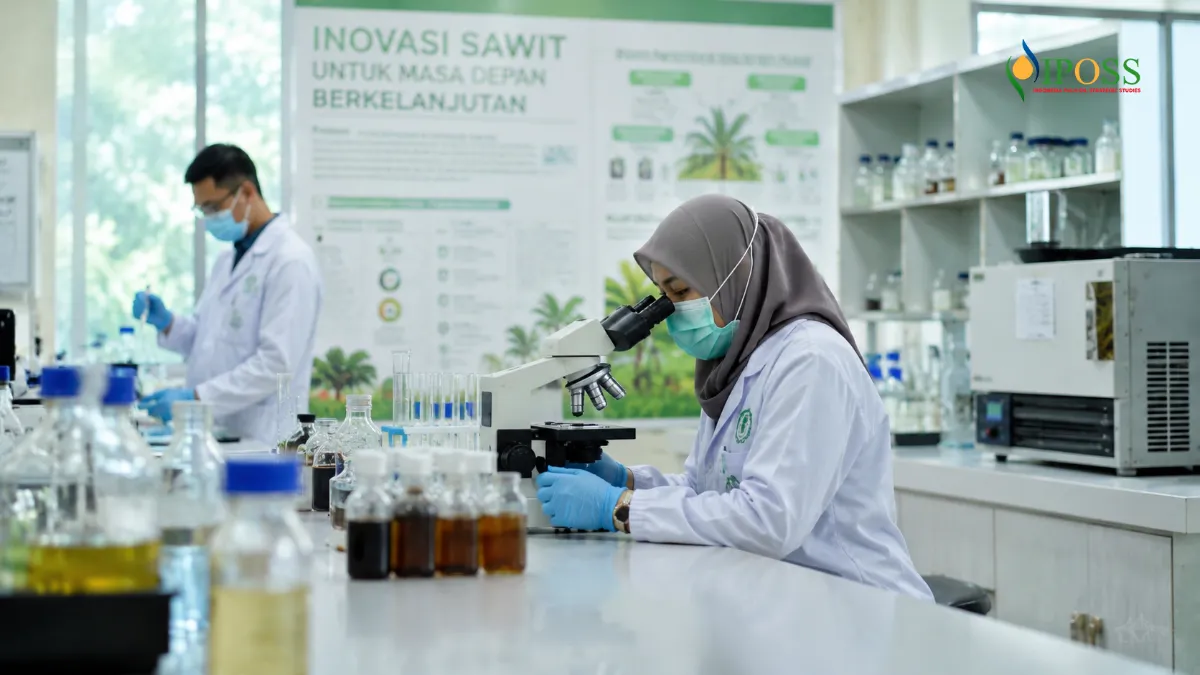
Palm Oil Research Week was first held by BPDP in 2019 when it was still named BPDPKS with the aim of disseminating research results. BPDP plans to hold the Indonesian Palm Oil Research Week (PERISAI) 2026 again, which will be held on July 20-21, 2026, with the aim of building an innovation ecosystem, business matching, and downstreaming research results, considering that BPDP has consistently provided funding for palm oil research through the Palm Oil Research Grant since its establishment in 2015. Considering the goals of PERISAI 2026, it is time for Indonesia to have a Roadmap for the Commercialization of Palm Oil Research Results for important innovations or research based on domestic excellence in efforts.
Palm Oil Research Week is a very important space to bring together researchers, academics, government, and industry players to share the latest research results. Various innovations presented show that Indonesian palm oil research continues to develop, ranging from aspects of cultivation, processing, biomaterials, bioenergy to environmental management. However, amidst these many achievements, there is one question that deserves collective attention: how to ensure that research results do not stop as prototypes in the laboratory, but truly become technology used by the industry?
In technology development, the concept of Technology Readiness Level (TRL) is known, which describes the readiness level of an innovation. Many studies stop at TRL 3 or TRL 4, when the concept has been proven in the laboratory and the initial prototype has been successfully created. However, the true economic value only emerges when the technology can pass the field testing stage, demonstration, scale-up, and finally be produced and widely applied by the industry.
If we take an example of oil recovery technology innovation from Palm Oil Mill Effluent (POME). Suppose a research institution successfully develops technology that can significantly increase oil recovery efficiency from POME. Scientifically, this innovation is a success worthy of appreciation. However, this success does not automatically generate economic benefits if it only stops at scientific publications or patents.
To ensure that the technology truly has an impact, a commercialization roadmap is needed. The first stage is the construction of a pilot plant in several palm oil mills with various different conditions to prove that the technology works under actual operational conditions with different environments. Next, it is necessary to establish POME oil quality standards, regulatory certainty regarding its utilization, and a financing scheme to help the industry adopt new technology that still carries risks.
In the next stage, the government can act as a facilitator through investment incentives, initial technology development funding, and, very importantly, regulatory harmonization across ministries. The industry acts as a development partner as well as an early adopter, while financial institutions provide financing when the technology has been proven technically and economically feasible. Thus, the journey of innovation does not stop in the laboratory but continues to form a new industry capable of creating added value, jobs, and national competitiveness.
The experience of various countries shows that the success of innovation is not only determined by the quality of research but also by the strength of the ecosystem that connects researchers, government, industry, investors, and the market. Countries that have successfully built technology-based industries generally have clear mechanisms to reduce innovation risks at the commercialization stage so that the private sector has the confidence to invest.
Therefore, in addition to being a forum for disseminating research results, Palm Oil Research Week can also develop into a forum for drafting a commercialization roadmap for innovation. Each technology deemed prospective is not only presented from a scientific perspective but also discussed regarding who the potential industry users are, what regulations need to be prepared, how the financing will be, and the target timeline for scale-up and mass production.
Ultimately, the success of research is not only measured by the number of publications, patents, or awards produced, but more importantly, by how much the innovation can be adopted by the industry and provide tangible benefits to society and the nation. That is where research turns into innovation, and innovation develops into a driver of national economic growth.
Noegroho, H. (2026). The Importance of a Commercialization Roadmap for Palm Oil Research Results. IPOSS Researcher Opinion, OP-2026-VII-011. Indonesia Palm Oil Strategic Studies. https://iposs.co.id/en/opini/pentingnya-roadmap-komersialisasi-hasil-riset-sawit