Does Plantation Location Affect the Palm Oil Price Received by Farmers?
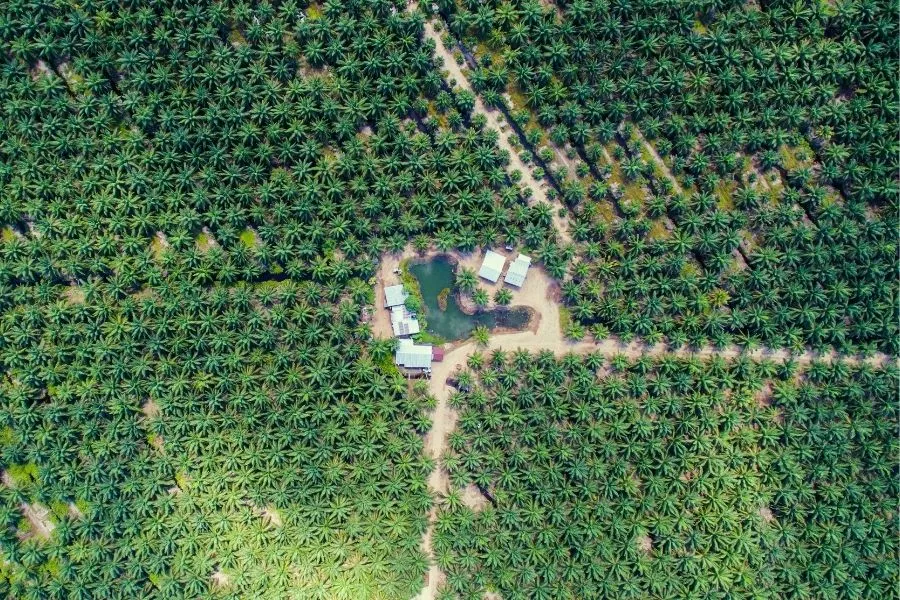
Two oil palm growers can produce fresh fruit bunches (FFB) of relatively the same quality but receive different selling prices. This difference is not always due to fruit quality or market price changes. The location of the plantation, access to the palm oil mill, and choice of buyers can also affect the sales value received by the growers. However, does a plantation farther from the mill always result in a lower selling price?
FFB must be transported and processed immediately after harvesting to maintain the quality of the oil produced. Delayed handling, especially if accompanied by fruit damage, can increase the free fatty acid (FFA) content, which lowers the oil quality. The Ministry of Agriculture Regulation Number 13 of 2024 stipulates that FFB must be received by the mill no later than 24 hours after harvesting. This time limitation makes transportation access and smooth distribution important in FFB marketing.
The research by Zhao et al. (2022) in Environmental Research Letters shows that the average distance of smallholder oil palm plantations to the nearest mill in the study area in Riau reaches 11.4 kilometers, farther compared to industrial plantations which reach 9.1 kilometers. However, this distance does not automatically reflect the transportation costs. Road conditions, vehicle availability, and harvest volume also determine logistics costs. Growers with limited harvests, for example, may face higher transport costs per kilogram if shipments are made individually.
In addition to transportation costs, the location of the plantation is also related to access to buyers. The research by Chandra et al. (2026) in Nature Sustainability on 1,541 non-industrial oil palm producers in Sumatra found that 77% of respondents rely on intermediaries to sell FFB, while only 23% can sell directly to the mill, including through cooperatives. This finding shows that geographical proximity to the mill does not necessarily guarantee direct sales access due to other factors, such as purchase contracts and marketing institutions.
In the trade chain, collecting traders play an important role in consolidating harvests and providing transportation. However, when growers have few buyer options, their bargaining position can become limited. The difference between the price at the mill level and the price received by growers also needs attention as it may include transportation costs, handling, and trade margins.
The research by Nesti et al. (2026) in Dharmasraya Regency, West Sumatra, found that changes in CPO prices at the exporter level are not proportionally passed on to independent oil palm growers. A longer supply chain is also associated with narrower profit margins for growers. However, these findings cannot be directly interpreted as the plantation distance being the main cause of price differences, as trade mechanisms and buyer structures also play a role.
Thus, the location of the plantation can affect the net sales value of FFB through transportation costs and market access, but it does not automatically determine a lower selling price. Therefore, improving road infrastructure, transportation efficiency, strengthening cooperatives, and ensuring price transparency and purchase deductions are important. These efforts are needed so that growers not only know the reference price at the mill level but also have marketing access that allows them to obtain more profitable sales results.