Even Old Oil Palm Trunks Still Produce Sugar Sap
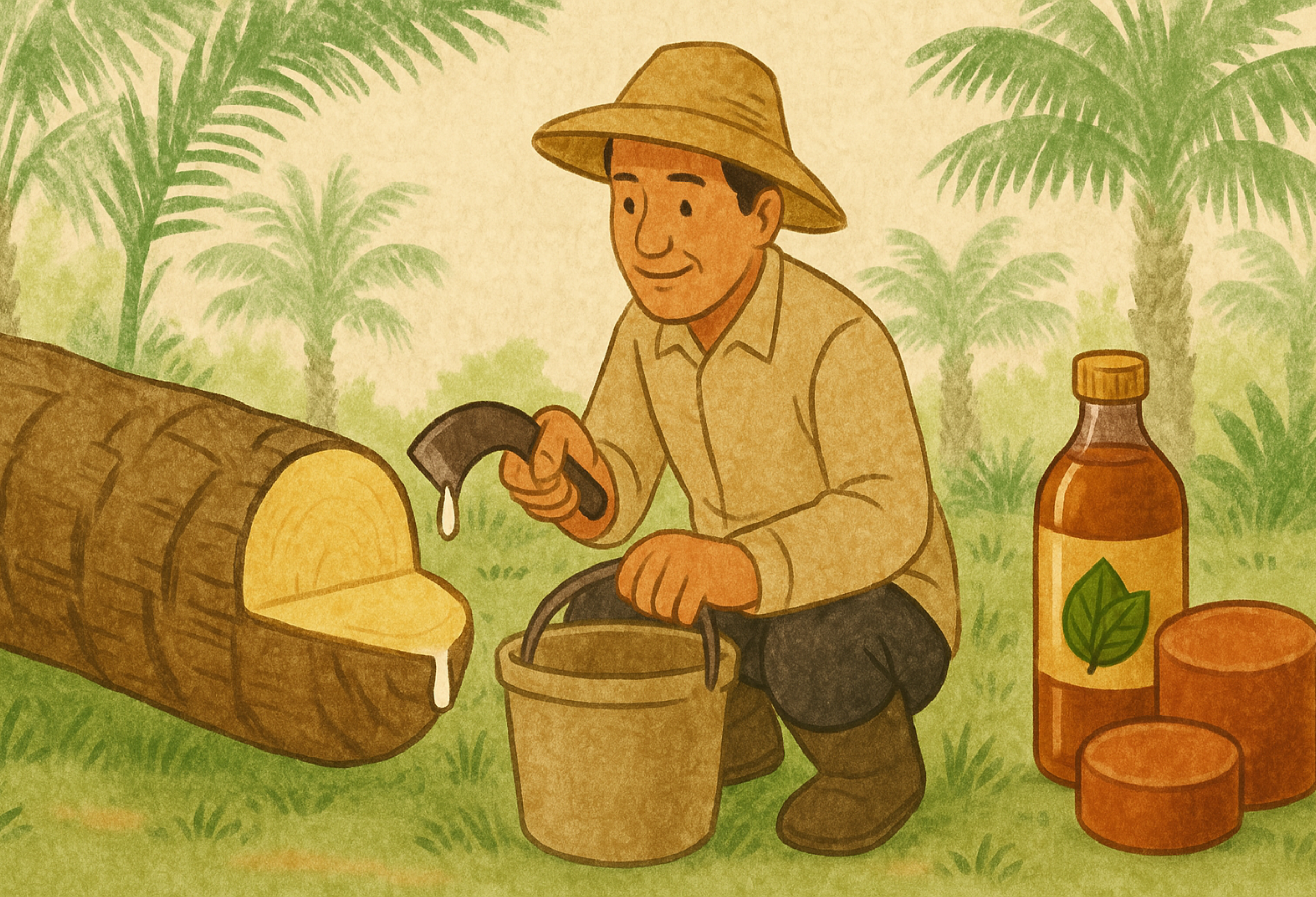
The more people neglect oil palm, the more benefits are discovered. Even the trunks of old oil palm trees that are due for replanting can still produce palm sap. Remarkably, the market potential can reach IDR 3 trillion in a year.
Palm sap is a white liquid with a sweet taste, produced by tapping the upper stalk or immature oil palm inflorescence, or by tapping the trunk of an old oil palm that has been felled.
According to research conducted by Prof. Siti Nurdjanah from Unila, palm trunk sap contains 7–14% sugar, consisting of glucose, fructose, sucrose, arabinose, and galactose. Additionally, the sap contains amino acids, organic acids, and vitamins (B and C).
Amidst the rising palm oil prices driven by the conflict between Iran and Israel, palm oil downstreaming continues to be accelerated by all relevant parties. Considering its extraordinary potential, the Indonesian government is attempting to implement palm oil downstreaming that is accessible to the general public. This is what the Ministry of Industry (Kemenperin) has done by inaugurating a pilot project for the production of palm sugar sap from old oil palm trunks resulting from replanting.
Until now, oil palm trunks felled during replanting have often been considered waste without value. However, opportunities are now opening up to process these trunks into palm sap, a raw material that can be processed into high-quality palm sugar.
According to the Director General of Agro Industry at the Ministry of Industry, Putu Juli Ardika, in a written statement as quoted by detik.com (June 24), this pilot project is an initiative to implement the policy of accelerating the downstreaming of the palm oil industry and optimizing the potential of alternative raw materials from old oil palm trunks resulting from replanting that have not been utilized.
According to him, one hectare of oil palm land consisting of 25–30 old trees can produce 5,000 to 6,000 liters of sap per month. If multiplied by the replanting target of 300,000 hectares per year, the potential production of palm sugar sap could reach approximately 1.5 to 1.9 million kiloliters per year.
From this amount, the market value could reach around IDR 3 trillion. Putu mentioned that this significant potential is very important for fostering community-based businesses that empower the communities around the plantation areas.
“The palm sugar produced from palm sugar sap has a very prospective market as a raw material for the soy sauce industry, traditional syrup, and ready-to-consume liquid sugar,” stated Putu (Sawit Sumber Mas Sarana website, June 24). According to him, the technology for processing into palm sugar has developed rapidly, and for safety in use as a consumable sugar, it is supported by the SNI 01-6237-2000 Palm Sugar standard.
Therefore, the involvement of oil palm plantation companies, cooperatives, as well as micro, small, and medium enterprises is expected to create synergy that benefits both parties while strengthening the economic sustainability of communities in the replanting areas.
Liquid sugar from old oil palm trunk sap is a natural and healthy alternative to white crystal cane sugar and artificial sweeteners. The beverage, candy, and processed food industries have a high demand for liquid sugar. This is what could become the market potential for liquid sugar from old oil palm trunk sap. ()