← News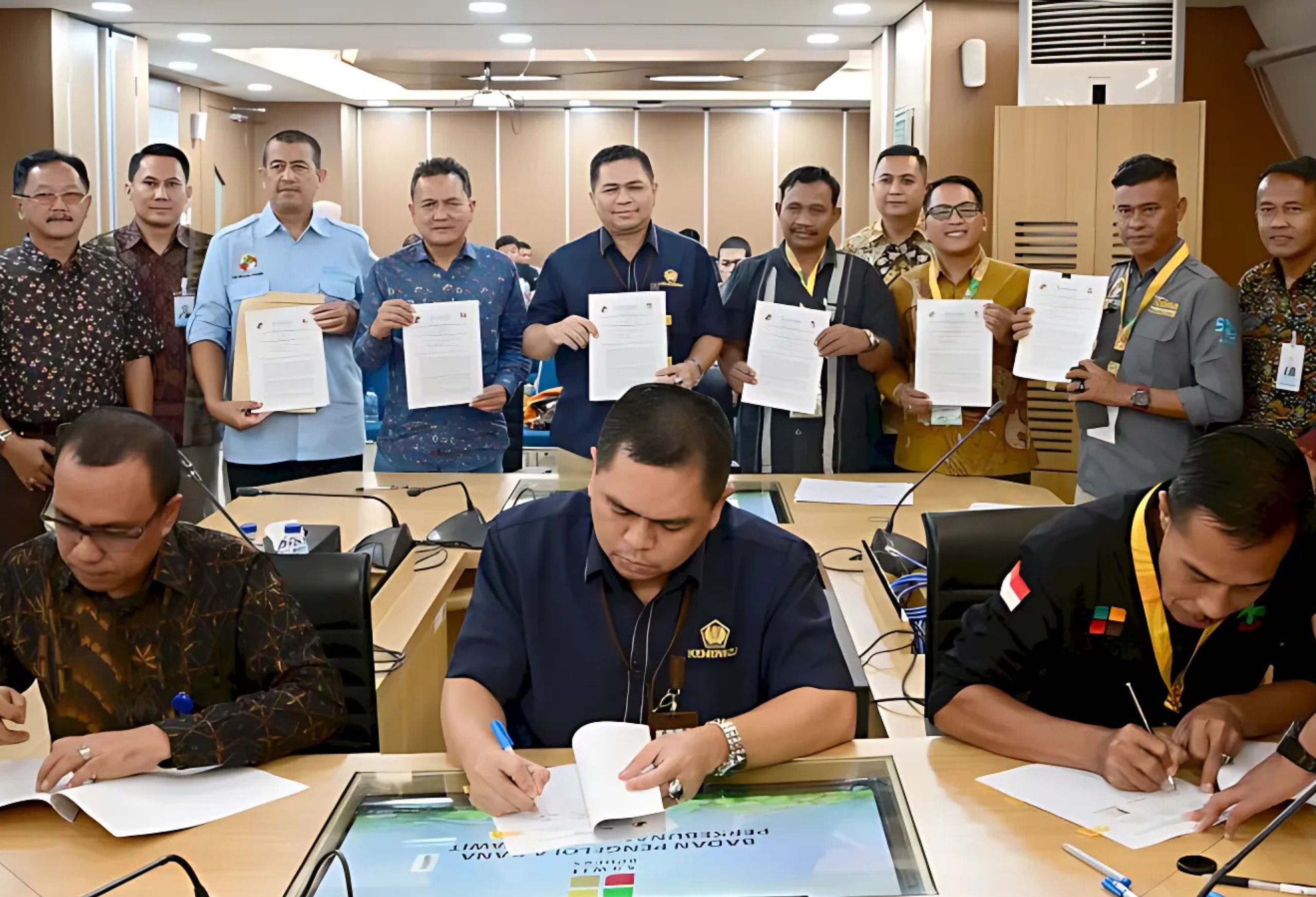
February 12, 2025231 views
PSR Funds of IDR 60 Million per Hectare Begin to Flow
Farmers were once worried about funding being temporarily halted, but now oil palm farmers are becoming enthusiastic. This is because the Palm Oil Plantation Fund Management Agency (BPDP) signed an agreement on February 5 for the disbursement of Smallholder Oil Palm Replanting (PSR) funds for Wave I of 2025. The total plantation area funded for replanting in this wave reaches 8,783 hectares.
The signing event brought together farmers from 14 provinces, including Aceh, Bangka Belitung, Bengkulu, Jambi, West Kalimantan, South Kalimantan, Central Kalimantan, Lampung, Riau, South Sulawesi, Central Sulawesi, Southeast Sulawesi, West Sumatra, and South Sumatra. Each farmer receives funding of IDR 60 million per hectare from their plantation.
In addition to PSR funds, BPDP also disbursed Infrastructure and Facilities (Sarpras) funds to 4 farmer groups from Aceh province during the event. Sarpras funds are used to finance the construction and improvement of infrastructure and supporting facilities needed in the oil palm industry, especially for smallholder oil palm farmers.
BPDP's Director of Fundraising, Normansyah Hidayat Syahruddin, quoted from the BPDP website (February 10), stated that the signing demonstrates the agency's seriousness in supporting smallholder oil palm replanting. According to him, this aligns with government regulations through Permentan Number 3 of 2022 and Permentan Number 19 of 2023, as well as BPDP regulations related to the disbursement of PSR funds and infrastructure.
As is known, PSR funds play a fundamental role in boosting the productivity of smallholder oil palm. Many of their oil palm plantations have reached an unproductive age, resulting in a drastic decline in harvest yields. With this program, farmers can replace old plants with superior seedlings, thus optimistically increasing harvest yields. PSR will not only have a positive impact on farmers' income but ultimately can support national economic resilience.
Clearly, this funding must not be halted as it is a key factor in ensuring the sustainability of Indonesia's oil palm industry, where 42% of the land is managed by farmers. PSR assistance will encourage farmers to increase productivity without needing to open new land, while infrastructure support is useful for achieving efficiency in distribution, processing, and market access.
Without it, farmers will struggle to increase harvest yields and competitiveness, which risks reducing the contribution of oil palm to the national economy. The sustainability of Indonesia's oil palm industry heavily depends on adequate replanting and infrastructure, so funding policies must continue to maintain Indonesia's position as the world's largest palm oil producer.
The PSR program has been launched since 2016. Since then, BPDP (formerly known as BPDPKS) has disbursed PSR funds for 364,552 hectares of land managed by approximately 160,000 smallholder farmers. However, its realization is still far below the target set by the government. The complexity of administrative requirements, including the verification of land status not being in forest areas, contributes to this issue. Breakthroughs and better synergy among stakeholders are still very much needed to overcome PSR obstacles.