← News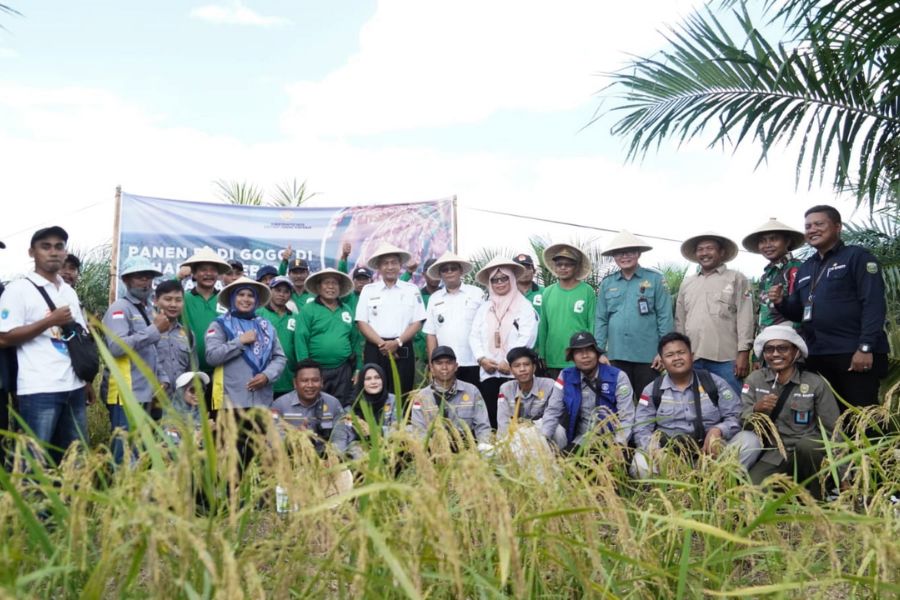
November 20, 2024136 views
Can Upland Rice Support Food Self-Sufficiency?
The government is actively promoting intercropping of food crops on oil palm replanting land. This effort is considered in line with one of the Asta Cita of the Prabowo Administration, self-sufficiency in food and energy. Upland rice, a type of rice for dry land, has recently become increasingly popular as a leading intercrop. What is the potential of upland rice?
Deputy Minister of Agriculture, Sudaryono, as reported by kontan.id (11/7/24) at IPOC 2024, expressed the government's hope for the involvement of palm oil industry players in efforts to increase national food production, especially rice. Oil palm land that is being rejuvenated can be planted with rice as an intercrop. According to the Deputy Minister of Agriculture, there are at least two benefits from intercropping food crops on oil palm land. Farmers receive income during the waiting period for oil palm to produce, and the government also benefits from additional food production.
On paper, increasing food production through the utilization of replanting land is very feasible. Indonesia has 17.3 million hectares of oil palm land (Ministry of Agriculture data 2023), with an average of 50,000 hectares of land being rejuvenated (PSR) each year. From there, there will always be sufficient land available for use as food crop intercropping.
According to infosawit records (3/6/24), the Ministry of Agriculture through the Directorate General of Plantations has identified the extent of land potential for upland rice intercropping. The results show that out of a total of approximately 500,000 potential lands, 200,000 are oil palm land, while the remaining 300,000 are coconut land. For the ongoing year 2024, the oil palm intercropping program is targeted for 120,000 hectares of land with a distribution scheme of 80,000 hectares through the agency route and 40,000 hectares through the partnership route.
[caption id="attachment_3743" align="alignnone" width="900"] Double harvest of upland rice and oil palm in Nanggala Village, Cikeusik District, Pandeglang[/caption]
The Ministry of Agriculture's “oil palm intercropping with food crops” program, abbreviated as “Kesatria,” is claimed to be successful in Nanggala Village, Pandeglang, Banten. Oil palm farmers harvest oil palm and upland rice simultaneously on 100 hectares of land. The village has become one of the successful PSR locations with its intercropping. From the integration of PSR with upland rice, the economy of farmer families waiting for their new oil palm to grow is supported.
The main challenges in the upland rice intercropping system with oil palm on rejuvenated land include the adequacy of nutrients and water between upland rice and young oil palm plants, especially on land with limited water storage capacity. For this system to succeed, proper layout planning, efficient palm oil waste management, selection of upland rice varieties, and consistent guidance from experts are required.
The success of upland rice and oil palm intercropping can provide dual benefits for farmers. Economically, this intercropping allows farmers to earn additional income during the waiting period for oil palm to reach optimal productivity, or for 3 years. Ecologically, the presence of upland rice can help maintain soil fertility by covering the land, reducing erosion, and increasing organic matter from plant residues.
Moreover, the success of this intercropping practice also serves as a response to the challenges of El Niño, which often causes extreme climate changes, such as prolonged dry seasons. On rejuvenated oil palm land, utilizing intercropping with upland rice can enhance local food security when there is a decline in oil palm yields due to water shortages.
Double harvest of upland rice and oil palm in Nanggala Village, Cikeusik District, Pandeglang[/caption]
The Ministry of Agriculture's “oil palm intercropping with food crops” program, abbreviated as “Kesatria,” is claimed to be successful in Nanggala Village, Pandeglang, Banten. Oil palm farmers harvest oil palm and upland rice simultaneously on 100 hectares of land. The village has become one of the successful PSR locations with its intercropping. From the integration of PSR with upland rice, the economy of farmer families waiting for their new oil palm to grow is supported.
The main challenges in the upland rice intercropping system with oil palm on rejuvenated land include the adequacy of nutrients and water between upland rice and young oil palm plants, especially on land with limited water storage capacity. For this system to succeed, proper layout planning, efficient palm oil waste management, selection of upland rice varieties, and consistent guidance from experts are required.
The success of upland rice and oil palm intercropping can provide dual benefits for farmers. Economically, this intercropping allows farmers to earn additional income during the waiting period for oil palm to reach optimal productivity, or for 3 years. Ecologically, the presence of upland rice can help maintain soil fertility by covering the land, reducing erosion, and increasing organic matter from plant residues.
Moreover, the success of this intercropping practice also serves as a response to the challenges of El Niño, which often causes extreme climate changes, such as prolonged dry seasons. On rejuvenated oil palm land, utilizing intercropping with upland rice can enhance local food security when there is a decline in oil palm yields due to water shortages.