Eight Years Since Trial, Palm Gasoline Still in Development Stage
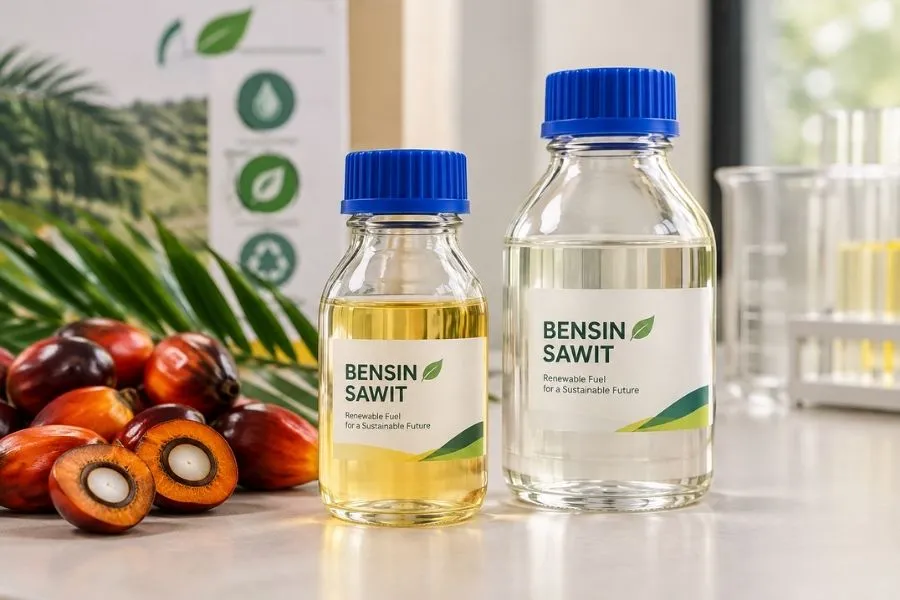
Indonesia has been testing the use of palm oil as a gasoline feedstock since 2018. However, eight years later, palm-based gasoline has not been widely produced and marketed. Initial tests have proven that palm oil can be processed into gasoline components using available refinery facilities. This condition indicates that technological success does not always follow with commercial production readiness.
Unlike biodiesel, which is used as a diesel blend, palm gasoline or green gasoline is produced through the processing of vegetable oils into hydrocarbons. One of the technologies used is co-processing, which involves processing palm oil together with petroleum-based feedstocks at refineries using catalysts. This process allows for the utilization of existing facilities, although operational adjustments are still required.
In December 2018, co-processing testing at the Plaju Refinery, South Sumatra, was conducted over seven days using refined, bleached, and deodorized palm oil (RBDPO) up to 7.5% of the processed feedstock. The Ministry of Energy and Mineral Resources (ESDM) reported that the test produced green gasoline with an octane number of 91.3, close to Pertamax, which has a RON of 92. The octane number indicates the gasoline's ability to resist uncontrolled combustion (knocking) in the engine. However, this number is not sufficient to ensure that all commercial fuel specifications have been met.
Technological developments continued through research by Ekananda et al. (2025) published in ALCHEMY Journal of Chemical Research. Laboratory-scale testing using CPO and RBDPO with petroleum-based feedstocks resulted in a conversion rate of 85–86%, with the calculated octane number of the product composition ranging from RON 91.2–93.55. Nevertheless, the gasoline fraction produced was only about 44.8–45.7%, lower than the 51.63% in processing petroleum-based feedstocks without the addition of vegetable oils. These findings indicate that the use of palm oil can alter the refinery product composition, necessitating further process and catalyst optimization.
In addition to technical challenges, economic feasibility is also a consideration. Utilizing existing refinery facilities has the potential to reduce investment needs, but production costs still depend on feedstock prices, catalyst requirements, and processing efficiency. On the other hand, the demand for palm oil for energy continues to rise. GAPKI data shows that palm oil consumption for biodiesel reached 12.70 million tons in 2025, surpassing the food industry demand of 9.83 million tons. Therefore, large-scale development of palm gasoline needs to consider the availability of feedstocks for other industries.
In October 2026, the development of biogasoline gained renewed attention through plans for testing at two Pertamina refineries. However, information on production capacity, processing costs, and a broad commercialization schedule remains limited.
The journey of palm gasoline development since 2018 shows that its processing technology has yielded results, but widespread implementation requires considerations beyond just the ability to produce gasoline. Cost feasibility, quality consistency, refinery readiness, and feedstock availability are factors that need to be considered before this technology can be developed into a part of the national fuel supply.