← News
November 24, 2025104 views
Breakthrough Seed Innovation Strengthens Climate Resilience in Indonesia's Oil Palm Sector
Climate resilience has now become an essential element in the sustainability of Indonesia's oil palm industry. Unpredictable weather changes, increasingly prolonged dry periods, and the rising frequency of extreme events such as El Niño have pressured plantation productivity and threatened smallholders' income. In this challenging situation, a science-based innovation has emerged as a new milestone for the future of national agriculture: DxP Dami Mas MTK, an oil palm seed proven to have drought tolerance and officially approved by the Ministry of Agriculture (Kementan) of the Republic of Indonesia for marketing.
According to Kompas (November 18), the MTK seed is the result of more than a decade of research conducted by the SMART Research Institute (SMARTRI), a research institution under Sinar Mas Agribusiness and Food. This innovation is not merely an effort to produce a new variety but a strategic step to address the increasingly real climate challenges. Drought has shown a significant impact on production yields. Every 100-millimeter water deficit can reduce yields by up to 8–10 percent. In high-risk areas like Lampung, the reduction can even reach 21 percent. SMARTRI estimates that the total productivity loss due to drought could reach 4.5 billion USD per year for Indonesia's palm oil industry. This figure illustrates the seriousness of the need for solutions that can strengthen the resilience of this strategic commodity.
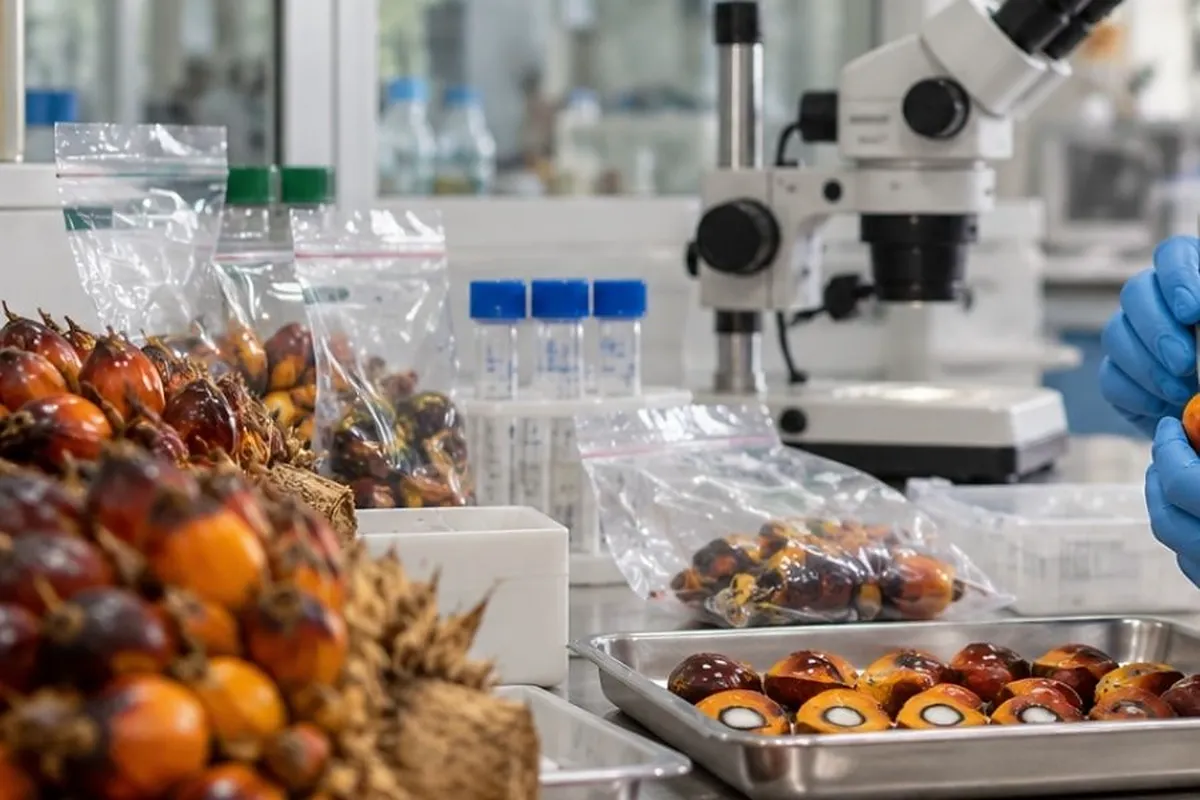
The development process of the MTK seed began by screening superior characteristics from more than 1,800 parent trees, followed by performance analysis of over 40,000 seedlings under artificial drought conditions. Scientists used High Throughput Phenotypic Screening technology to measure the drought factor index for each seedling, a series of indicators that assess the plant's response when experiencing water stress. From this lengthy selection process, 14 selected families were field-tested in various locations with different climate challenges. Two varieties then showed consistent and most stable performance: MTK 1 and MTK 2.
The superiority of this seed has been proven through a series of field trials. In dry conditions, the results are at least 12 percent higher compared to standard varieties. The performance difference becomes more pronounced during extreme drought periods such as those during El Niño 2015 and the Indian Ocean Dipole 2018, when the MTK seed performed more than 25 percent better. What makes this achievement significant is its validation process: the performance of the MTK seed was independently verified by a scientific panel from the Ministry of Agriculture, making it the first drought-resistant seed to receive official approval.
This innovation also reflects a significant step towards sustainable agriculture. Climate resilience is a crucial foundation for the palm oil industry to remain productive without sacrificing the environment or farmers' welfare. According to Dr. Jean-Pierre Caliman, Director of SMARTRI, climate change is no longer a long-term risk but a reality directly felt by smallholders. Therefore, science-based solutions like the MTK seed are key to maintaining production stability and facing increasingly extreme weather conditions. This sentiment is echoed by Dami Mas CEO, Suryanto Bun, who emphasizes that understanding the needs of smallholders and independent farmers is the basis for developing this seed, ensuring that the innovation created is truly relevant to the realities on the ground.
With the growing global impact of drought, climate-resistant seeds are not only important for Indonesia but also have great potential to assist palm oil plantations in West Africa, Latin America, and India. The launch of DxP Dami Mas MTK underscores that consistent scientific research can provide real solutions for the agricultural sector. This innovation paves the way for a more resilient, adaptive, and sustainable future for the palm oil industry, while also demonstrating how a single seed breakthrough can be the starting point for a major transformation in national food and agricultural resilience.