Biodiesel Incentives Increase, How Strong is Palm Oil Fund to Support B50?
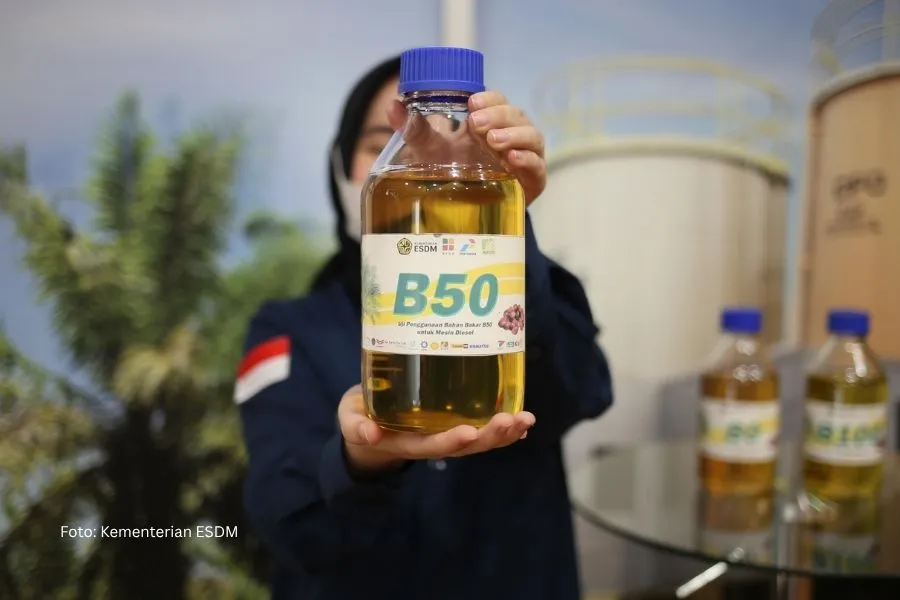
The realization of biodiesel incentives has once again come into focus after the Palm Oil Plantation Fund Management Agency (BPDP) recorded the disbursement of B40–B50 incentives reaching IDR 17 trillion in the first half of 2026. This figure is already more than half of the projected biodiesel funding needs for the entire year, which is said to reach around IDR 32 trillion. This indicates that the biodiesel program is actively running, but also signals that its funding needs are increasing.
Palm-based biodiesel has long been one of the government's main instruments to reduce dependence on imported fossil fuels. BPDP states that the implementation of B50 starting July 1, 2026, is aimed at strengthening energy security, reducing fossil fuel imports, and increasing the added value of palm oil commodities domestically. Based on data from the Ministry of Energy and Mineral Resources (ESDM) cited by BPDP, the biodiesel program from 2015–2025 is claimed to have resulted in foreign exchange savings of IDR 722.9 trillion, created added value of IDR 114.7 trillion, supported job absorption, and reduced greenhouse gas emissions.
However, increasing the blend from B40 to B50 also brings financing consequences. The higher the portion of biodiesel in diesel, the greater the need for palm-based FAME (Fatty Acid Methyl Ester) that must be absorbed. At the same time, incentives are needed to cover the price difference between biodiesel and fossil diesel to keep fuel prices affordable. Reuters notes that B50 is one of the most ambitious efforts to replace imported diesel with domestic biofuel, but its sustainability is heavily influenced by the price difference between palm oil and diesel.
The amount of biodiesel incentives is greatly influenced by the price difference between fossil diesel and palm biodiesel. When world oil prices rise, fossil diesel prices usually follow, making the gap with biodiesel prices smaller. In this condition, the incentives that need to be paid can decrease. Conversely, when world oil prices fall, fossil diesel becomes cheaper. If palm biodiesel prices remain higher, the price difference that the government must cover becomes larger, thus increasing the need for incentives.
The large need for incentives makes palm oil fund management increasingly cautious. BPDP estimates the biodiesel funding need this year to be around IDR 32.3 trillion. After realizing IDR 17 trillion in the first half of 2026, there is still a financing need of about IDR 15.3 trillion for the remainder of the year. This means that the challenge in the second half is not only to continue disbursing incentives but also to ensure that palm oil fund revenues are sufficient to support B50 without disrupting the funding of other programs.
The challenge is that the main source of biodiesel funding comes from palm oil export levies. When B50 increases domestic CPO absorption, export space potentially narrows. Reuters cites industry players and analysts who assess that increased domestic biodiesel consumption can reduce palm oil exports, which in turn can pressure export levy revenues as a source of incentive funds. In other words, B50 can increase funding needs, but at the same time potentially reduce one of its revenue sources.
Ultimately, the challenge of B50 does not stop at engine readiness, CPO supply, or FAME production capability. This program also heavily depends on the balance of palm oil funds. When CPO prices, fossil diesel prices, export volumes, and export levy revenues are in a supportive position, biodiesel financing is relatively safer. However, if CPO prices remain high while fossil diesel prices weaken, the gap that must be covered through incentives can become larger. Therefore, the direction of world oil prices becomes one of the important variables in assessing how heavy the biodiesel incentive burden that palm oil funds must bear.
With the realization of IDR 17 trillion in the first half, palm oil funds have so far been able to support the biodiesel program. However, B50 will increase financing needs, while its funding source remains dependent on palm oil export levies. Therefore, the strength of palm oil funds is not only determined by the size of the available budget but also by the ability to maintain exports, levy revenues, and allocations for other programs such as PSR, research, human resources, and productivity improvement. Thus, B50 can still be supported, but it must not be allowed to run without a strict funding balance.