Oil Palm Sticks, a Byproduct Gaining Export Value

The oil palm industry has often been discussed in terms of its main products, such as CPO, cooking oil, biodiesel, and oleochemicals. However, at the plantation level, oil palm also produces various by-products that can still be utilized. One of these is oil palm sticks, which are the leaf spines of the oil palm separated from the frond and can be processed into raw materials for brooms, crafts, and even export products.
The potential of oil palm sticks is beginning to gain attention because the raw materials are available around the plantations and the processing is relatively simple. Oil palm leaves are separated from the frond, and then the leaf spines are taken as sticks. After that, the sticks are dried, sorted by size and quality, then tied and packaged. Although simple, this process still requires quality standards to ensure the product does not easily break, mold, or get rejected by the market.
The export opportunity for this product is starting to be seen from the first shipment of 28 tons of oil palm sticks to China (BPDP, 6/17). These products come from oil palm plantations in Riau, North Sumatra, and Aceh, and are collected and processed through the involvement of farmers, MSMEs, and cooperatives. This data shows that oil palm sticks can not only be utilized for local needs but also have the potential to enter international markets when quality and supply continuity are met.
The importance of oil palm sticks lies in the economic chain formed at the local level. In the export example, at least seven cooperatives were involved in providing raw materials, with economic benefits estimated to be felt by around 2,800 cooperative members. This shows that oil palm by-products can open up additional income opportunities for communities around the plantations, from raw material collection, drying, sorting, packaging, to distribution.
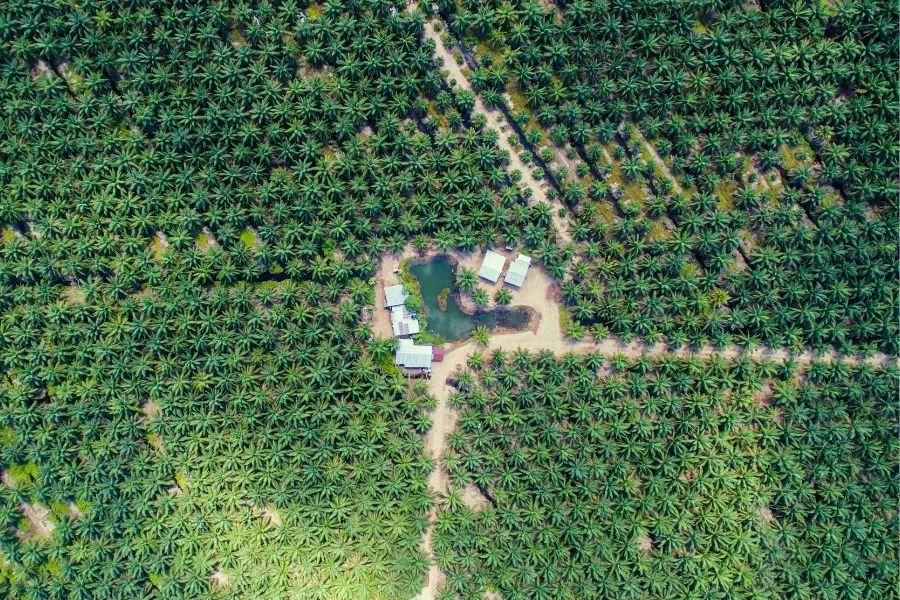
For oil palm centers like East Kalimantan, this opportunity is relevant to be developed. With the presence of extensive oil palm plantations, fronds and oil palm leaves become a routinely available source of raw materials. If managed well, parts of the plant that were previously underutilized can become value-added products for village communities, MSMEs, and local cooperatives.
The development of oil palm sticks also aligns with the principles of a circular economy. Oil palm not only produces main products but also holds potential from its biomass and by-products. BPDP notes that oil palm sticks can be developed as export raw materials or MSME craft products. Capacity building efforts have also been carried out through workshops in several regions, such as Siak, Kampar, Bengkalis, Muaro Jambi, East Belitung, and Pasangkayu, to encourage product quality to meet market needs.
However, for oil palm sticks to truly become a regional economic driver, the challenge does not stop at the availability of raw materials. This product requires standardization of size, drying quality, supply continuity, market access, and strong institutions. Without these, export opportunities are difficult to develop sustainably.
Thus, oil palm sticks demonstrate that the economic value of oil palm is not only in its oil. Simple products from the plantation can also create benefits if they enter a well-organized value chain. For oil palm centers, including East Kalimantan, the development of oil palm sticks can be one way to expand the economic benefits of plantations more directly to the surrounding communities.