← News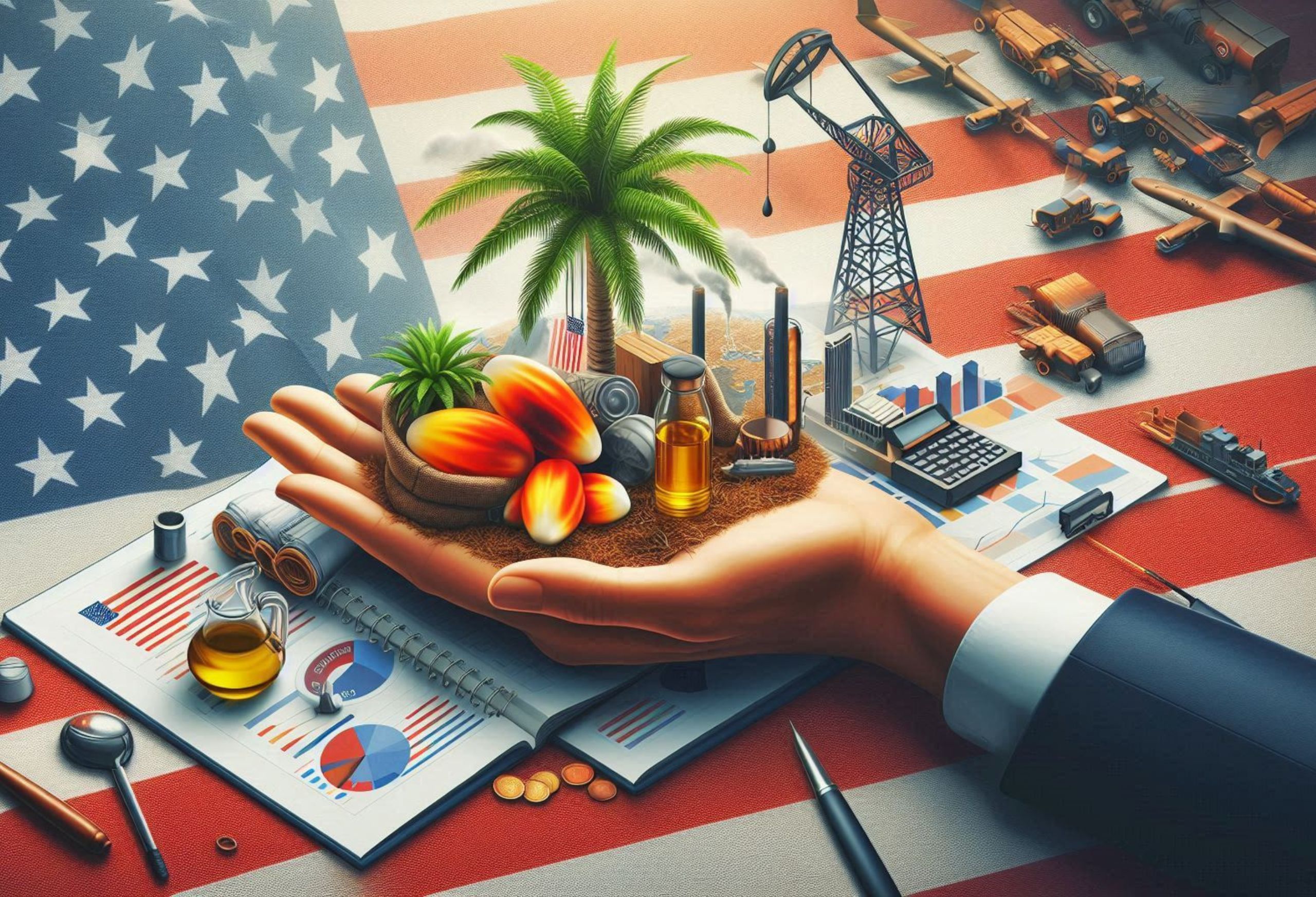
March 13, 2025106 views
Trump's Policy Maneuvers, Is Palm Oil Affected?
President Donald Trump implemented a protectionism strategy to assert the power of the United States in the global economy. Trump's policy maneuver is considered capable of igniting a trade war that could affect the stability of global commodity prices. Indonesia's main exports, including palm oil, are projected to be impacted as well.
According to senior economist Masyita Crystallin, Trump's policy could impact Indonesia's economy as a country that relies on international trade. "Indonesia, which is a major exporter of commodities such as coal, palm oil, and rubber, could be affected by sharp price fluctuations due to the global trade war," Masyita stated, as reported by tempo.co (January 26).
One of President Trump's protectionism policies is the imposition of a 10% tariff on all imports to the US through Executive Order 14195 on February 1, 2025. This policy aims to boost domestic production and reduce US dependence on imported products. According to the Tax Foundation website, the implementation of the 10% tariff scheme could increase US revenue by up to USD 2 trillion.
The impact of higher import tariffs causes palm oil prices to become more expensive in the US market, reducing its competitiveness compared to other vegetable oils produced domestically. According to the USDA, the US is the second-largest soybean producer after Brazil, with production reaching 115.38 million metric tons in the 2022/2023 season, or about 30% of total global production.
"There is a high likelihood that the trade war will affect our exports. If this continues, it will definitely have an impact, because it affects the world, globally. Our importing countries that are affected will certainly affect us as well," explained Eddy Martono, Chairman of GAPKI, to CNBC (March 7).
Reflecting on the US-China trade war in 2018, which caused global trade turmoil, disrupting the vegetable oil market and causing CPO prices to drop by more than 20% in 6 months. This time, the increase in US import tariffs is projected to affect export reductions by more than 15% in the first year and a significant drop in CPO prices. This commodity price decline, according to economic experts, will have implications for reduced state revenue from the sector, as well as decreasing purchasing power in commodity-producing regions.
In 2023, America ranked fifth as the largest importer of Indonesian palm oil with a volume reaching 1.9 million tons (BPS). Assuming exports to America remain unchanged in the following year (data not yet available), by 2025, the figure could drop to around 1.6 million tons as a consequence of protectionist policies. This adds to the series of challenges for Indonesian CPO exports, which previously also faced challenges from the European Union.
However, some parties, such as Sahat Sinaga, Executive Director of the Indonesian Vegetable Oil Industry Association (GIMNI), view the current dynamics as an opportunity for Indonesia to diversify exports to other potential countries like China. "There is a lot of demand from China because they really need our palm oil. I think this is an opportunity we need to take advantage of," Sahat stated, as quoted by CNBC (March 7).
To address the impact of US protectionism policies on palm oil exports, the Indonesian government needs to take strategic steps to mitigate risks. Diversifying export markets by establishing closer trade cooperation with countries that have high demand for palm oil, such as China, is very important. The government also needs to be more serious about increasing the added value of the palm oil industry by promoting the downstreaming of its derivative products, thereby reducing dependence on crude palm oil exports.