Keeping Oil Palm Productive Amidst Drought
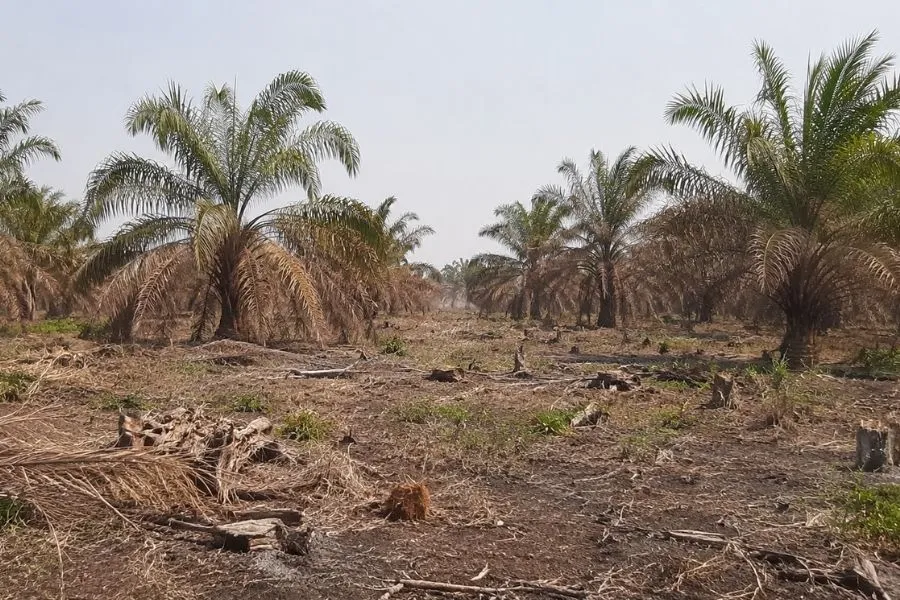
The increasingly prolonged dry season due to climate change necessitates that oil palm plantations be better prepared to adapt. For oil palm, the challenge is not only to withstand dry weather but also to maintain productivity amidst limited rainfall, increased risk of land fires, and pressure on smallholders' income. If not anticipated early on, climate pressure can evolve from technical issues in the plantation to broader production and sustainability challenges.
The Ministry of Agriculture (Kementan) emphasizes that climate change should not be an excuse for the decline in national plantation production. Minister of Agriculture Andi Amran Sulaiman stated that mitigation needs to be carried out in a planned and consistent manner through the application of technology, resource conservation, and adaptive plantation management. With these steps, productivity is expected to be maintained, smallholders' welfare improved, and national economic resilience strengthened.
For oil palm plants, a prolonged dry season can have layered impacts. Prolonged drought can hinder the formation of female flowers, increase flower and fruit drop, reduce bunch weight, and affect the decline in fresh fruit bunches (FFB) production, bunch weight, oil yield, and crude palm oil (CPO) production. Dry conditions also increase the risk of land fires, especially in peat areas that are more prone to burning when the peat layer loses moisture. This means that oil palm productivity during the dry season heavily depends on the plantation's readiness to manage water, maintain soil moisture, and prevent environmental disturbances from the outset.
Therefore, drought mitigation needs to be part of daily plantation management. The Directorate General of Plantations encourages the implementation of climate change adaptive cultivation, support for Good Agricultural Practices and Climate Smart Agriculture, enhancement of plantation human resource capacity, and the use of climate information as a basis for decision-making at the smallholder level. This approach is crucial so that smallholders do not only respond to drought when its impact is already felt but have a plantation management guide before production risks increase.
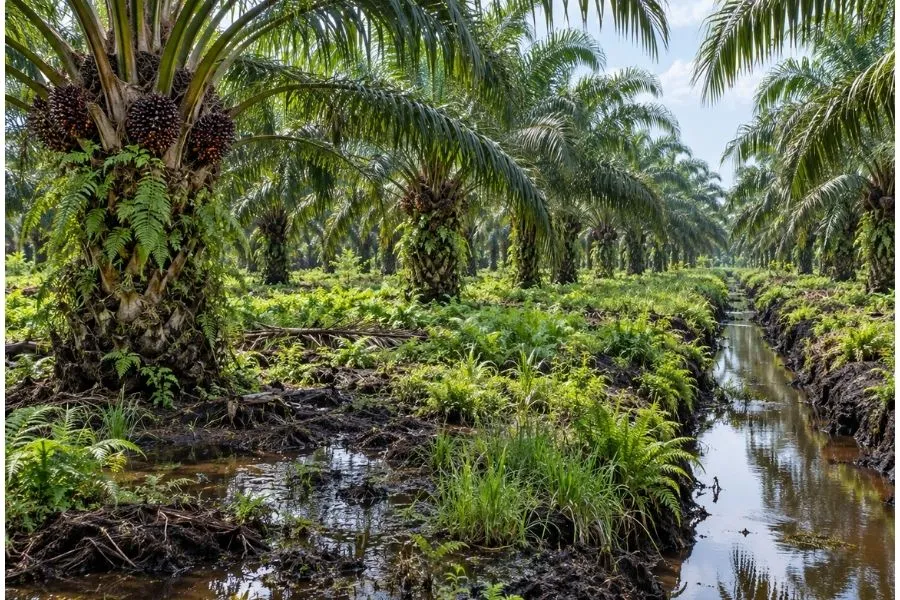
One of the main steps is to implement proper water management. On mineral land, increasing and maintaining groundwater reserves can be done through the construction of adequate rorak in each plantation block, the creation of reservoirs, infiltration wells, dams on ditches or stop bunds, ridges in lowland areas, and terracing on sloping land. These measures can help increase water infiltration, reduce surface runoff, and maintain groundwater availability during the dry season.
These efforts need to be strengthened with soil conservation, such as the use of oil palm fronds and empty bunches as mulch, the use of compost and biochar, and the planting of Legume Cover Crop (LCC) during oil palm replanting. LCC is a ground cover plant from the legume group that functions to reduce soil evaporation, maintain moisture, suppress weeds, reduce erosion, and help improve soil fertility. After wilting and dying naturally, LCC biomass can also accumulate on the soil surface as organic matter.
On peatland, management focuses on maintaining the water table height around 40–60 centimeters below the soil surface. The goal is to maintain peat moisture and reduce fire risk without disrupting plant root conditions. Steps that can be taken include building or maintaining canal partitions, continuously monitoring the water table through monitoring wells and piezometers, and installing water gates at water discharge points.
Implementing these steps is indeed not easy. However, oil palm plantation businesses, both companies and smallholders, need to understand the importance of Good Agricultural Practices as part of fulfilling the principles and criteria of Indonesian Sustainable Palm Oil (ISPO). The goal is to maintain plantation productivity and minimize production disruptions when prolonged drought occurs.
In addition to maintaining productivity, fire mitigation needs to be carried out through regular patrols, the formation of standby teams, emergency response training and simulations, provision of firefighting facilities in each plantation unit and division, monitoring of hot spots, and the construction of fire towers. Socialization regarding the prohibition of burning land and indiscriminately discarding cigarette butts also needs to be strengthened. All these steps must be supported by the implementation of standard emergency response operational procedures so that each fire incident can be immediately addressed and the spread of fire can be prevented before it becomes more widespread and difficult to control.
Ultimately, keeping oil palm productive during the dry season requires water management, soil and water conservation, the use of climate information, the application of GAP principles, and consistent fire preparedness. With stronger mitigation, productivity can be maintained, the risk of yield loss minimized, and oil palm can continue to thrive as a strategic commodity amidst climate change.