← News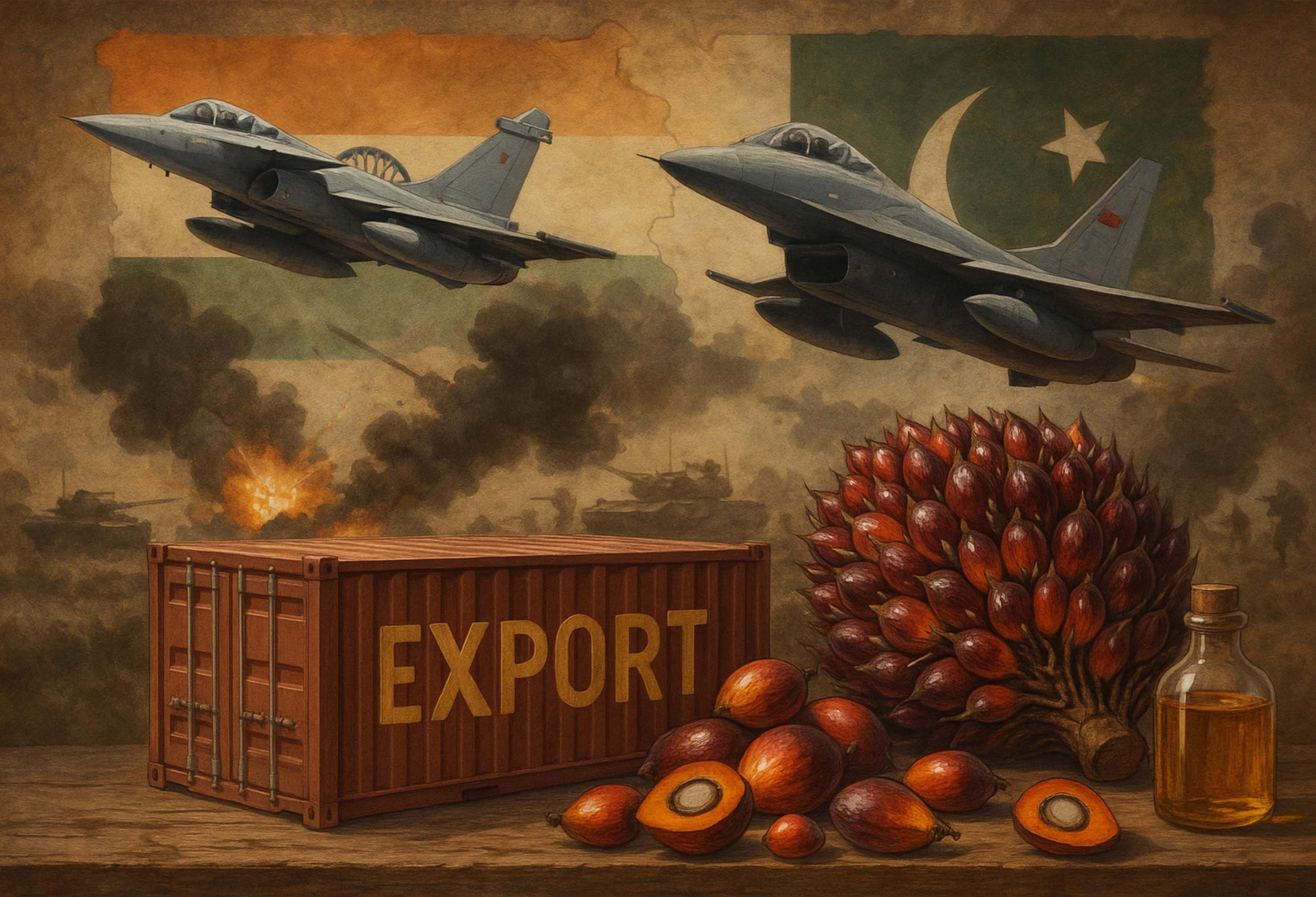
May 23, 2025465 views
Navigating Palm Oil Exports Amid India–Pakistan Geopolitical Risks
The relationship between India and Pakistan has indeed calmed after a period of tension. However, as two countries with a long history of conflict, the potential for conflict remains a risk that must be watched, especially in the context of international trade. Indonesia, as a major exporter of palm oil, has a significant interest in the stability of the South Asian region, considering that India and Pakistan are among the top three main markets for national palm oil exports.
According to the 2024 report by the Indonesian Palm Oil Association (GAPKI), India is recorded as the second-largest destination for Indonesia's palm oil exports after China, with a volume of around 5 million tons per year. Meanwhile, Pakistan absorbs about 3 million tons. Combined, these two countries contribute approximately 8 million tons of Indonesia's total palm oil exports, which reached 29.5 million tons in the same year. This means that more than 25% of national palm oil exports depend on the stability of relations between these two South Asian countries.
The Chairman of GAPKI, Eddy Martono, stated that if tensions between India and Pakistan rise again to the point of disrupting trade routes, Indonesia's palm oil exports could be seriously affected. A decline in exports will increase domestic stock, which could eventually depress the price of crude palm oil (CPO) in the global market.
“If our exports to these two countries decrease, then stock will rise and could depress prices. Not only palm oil, but all vegetable oils will be pressured in terms of price,” said Eddy to detik.com.
To anticipate this potential risk, industry players and the government are starting to develop market diversification strategies. One concrete step currently being implemented is expanding export destinations to countries that have not been maximized. Egypt, for example, emerges as a promising alternative market. Currently, Indonesia's palm oil export volume to Egypt is still relatively small, around 840,000 tons per year. However, with its strategic location, Egypt is considered a main gateway to reach the Middle East and Africa.
“At the end of this month, we, along with the government, will go to Egypt. This is part of efforts to increase exports and diversify markets,” said Eddy, emphasizing the importance of opening new channels so that the industry does not rely too heavily on traditional markets like India and Pakistan.
In addition to market expansion, industry players also hope for more adaptive domestic policies. The increase in the export levy (PE) on CPO from 7.5% to 10%, which takes effect on May 17, 2025, raises its own concerns amid global market pressures. Although this policy is intended to support funding for biodiesel programs and smallholder replanting, entrepreneurs hope there will be room for open evaluation.
In response, the Head of the Fiscal Policy Agency, Febrio Kacaribu, stated that the government is ready to review the export levy policy through the BPDP Steering Committee, considering the balance between state revenue and the sustainability of the national palm oil industry.
Strategic steps like these indicate that Indonesia's palm oil industry is now in a transition phase towards a more adaptive and resilient pattern. External challenges such as geopolitical conflicts or global price fluctuations are indeed unavoidable. However, with a quick response, close coordination between the business world and the government, and serious efforts to open new markets, this industry has the opportunity to grow more stably in the long term.
Indonesia, as a major player in the global palm oil industry, holds a strategic position that not only needs to be maintained but also continuously strengthened. Geopolitical challenges such as the India-Pakistan conflict serve as a reminder that export resilience cannot be built solely on volume but must be supported by market diversification and policies responsive to global dynamics.