Documentary Screening: “Palm Oil in the Land of Orangutans”

Film Palm Oil in the Land of Orangutans is a documentary that has startled many parties. In addition to raising the theme of sustainability in oil palm plantations, this work by a Danish filmmaker seems to overturn the belief of some residents of the blue continent that palm oil is not environmentally friendly.
The issue of oil palm and the environment has long been a concern both nationally and internationally. On one hand, the oil palm industry is the backbone of Indonesia's economy, contributing significantly to foreign exchange, employment, and regional development. However, on the other hand, there are still negative perceptions among some international communities regarding the impact of palm oil on deforestation, greenhouse gas emissions, and wildlife sustainability, particularly orangutans.
The documentary film “Palm Oil in the Land of Orangutans” produced by Copenhagen Film Company, Denmark, emerges amidst this debate. The film visually depicts the reality on the ground, showing how palm oil interacts with the environment, particularly the orangutan habitat. The screening of this film (10/17/25) is important as an objective public education medium, as well as an entry point for constructive critical discussions sponsored by the Indonesian Embassy in Copenhagen, Copenhagen Zoo, and Indonesia Palm Oil Strategic Studies (IPOSS).
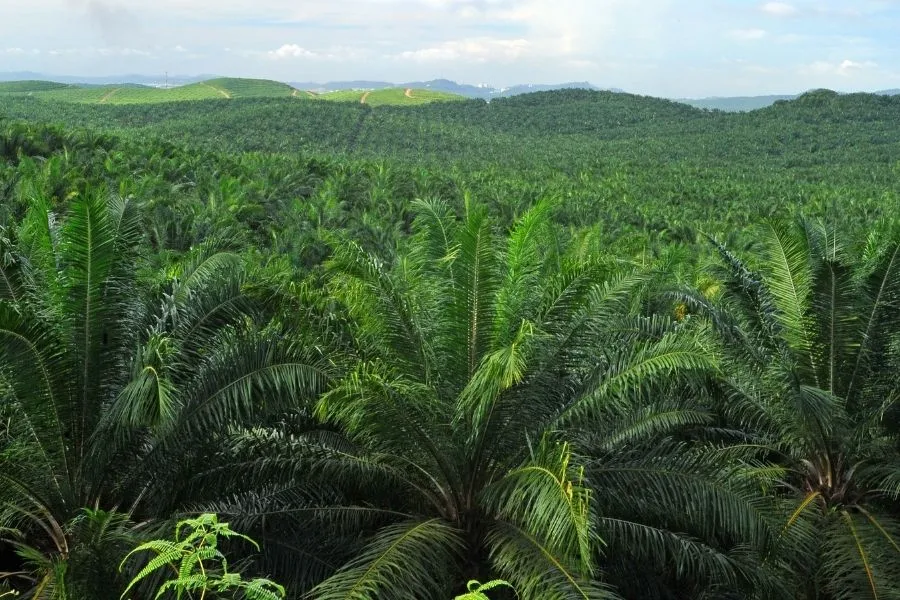
This film, a collaboration between Copenhagen Zoo and United Plantation (UP), was initially intended to promote sustainable palm oil. Over 8 years (2015-2023), they conducted forest rehabilitation while empirically observing the biodiversity emerging in a “forest corridor” spanning 318 hectares that connects oil palm plantation areas and protected forests in Pangkalan Bun, Central Kalimantan. The film shows, for instance, several orangutans that have recently given birth and are living well in the oil palm plantations. Additionally, various animals such as insects, snakes, and various birds also breed normally. This indicates that palm oil production can be carried out without affecting the ecosystem of flora and fauna.
The findings above have certainly sparked many discussions both in Europe and other regions. Some have accepted it well, while others remain opposed. Understandably, the film seems to underscore the potential for palm oil production to coexist with environmental conservation and wildlife. The reality on the ground also illustrates the success of the forest corridor project in increasing the number and population of various species.
In general, this work by European citizens offers an unusual perspective on the oil palm industry, primarily emphasizing the importance of sustainability and environmental conservation.
For Indonesia, this activity has strategic significance. First, to demonstrate openness in discussing palm oil issues scientifically and balanced. Second, to educate the public—especially the younger generation and academics—to understand the complexity of the relationship between the economy, environment, and sustainable development. Third, this activity strengthens green diplomacy cooperation between Indonesia and the international community, particularly with Denmark through the support of the Indonesian Embassy in Copenhagen and Copenhagen Zoo. Thus, the screening of this film is not merely an entertainment event, but a dialogue forum that opens insights, connects perspectives, and encourages the emergence of joint solutions for a more sustainable future. ()