← News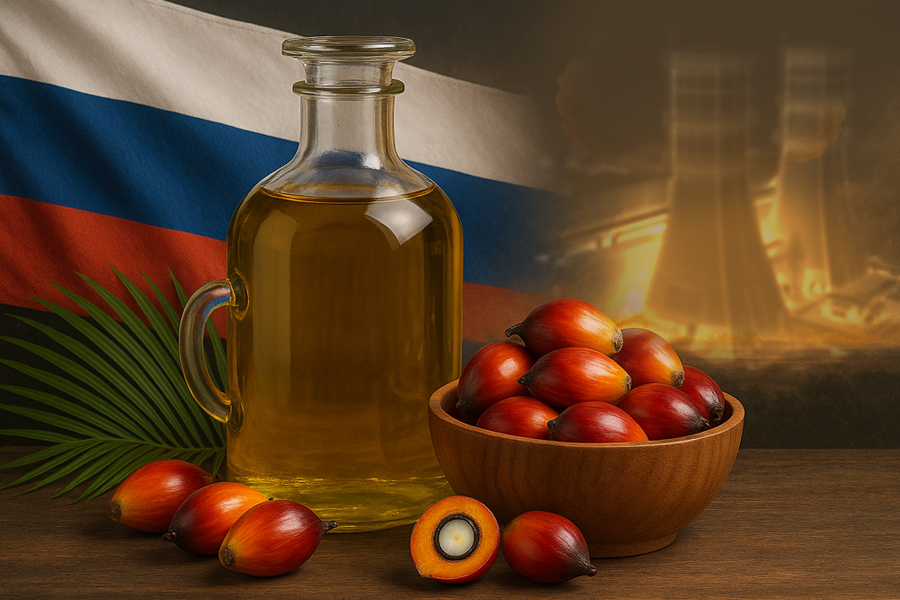
May 5, 2025130 views
Indonesia's Palm Oil Barters with Russian Nuclear, Why Not?
Barter is not merely an exchange of goods, but also a symbol of strategic cooperation. This unusual step comes from Russia. The country, known as an energy giant, is reportedly opening opportunities to barter advanced nuclear technology with palm oil from Indonesia. The plan to exchange these two key commodities has immediately captured the attention of the public and global analysts, not only because of the rarely used barter method but also due to its potential impact on changing the map of strategic cooperation between countries.
This move reminds the public of the unique history of relations between the two countries. Data from the Ministry of Defense shows that in 2017, Russia once offered to barter Sukhoi Su-35 fighter jets with Indonesian commodities, ranging from coffee, tea, palm oil, to the most unusual: soybeans. Although the plan was not fully realized, it demonstrated that barter is an economic diplomacy scheme that has appeared several times in RI-Russia relations.
Now, history seems to be repeating itself. Russia has long been known as a country with highly developed civilian nuclear technology, through Rosatom, which has undertaken reactor projects in various countries, including Turkey and Bangladesh. On the other hand, Indonesia is the global palm oil king. Indonesia's palm oil products not only support non-oil and gas exports but also serve as raw materials for renewable energy (biodiesel) and the global food industry.
Nuclear technology is often viewed only from a military perspective, whereas its civilian benefits are vast. In the context of energy, nuclear power plants (PLTN) are seen as one of the best solutions to reduce carbon emissions while ensuring the reliability of the national electricity supply. With nearly zero emissions and high efficiency, nuclear is key to the global clean energy transition.
According to Law Number 10 of 1997 on Nuclear Energy, besides being used for power generation (PLTN), nuclear technology can also be used in the health sector for cancer diagnosis and therapy or radiotherapy, agriculture to produce superior plant varieties and control pests, and in the industrial sector for technical inspection and quality control of materials.
Amid the significant changes Russia is experiencing in its global supply chain, especially since Western sanctions following the invasion of Ukraine, food commodities and renewable energy such as palm oil have become important to meet domestic needs and re-export to non-Western partner countries.
For Russia, palm oil is not just a food commodity but also a biofuel, which can strengthen their energy self-sufficiency and processing industry. According to data from the Central Statistics Agency (BPS), in 2022, Indonesia's palm oil exports to Russia reached 607,694 tons with a value of US$ 742.53 million. Although there was a 4.04% decrease in volume compared to the previous year, the export value increased by 12.3%. This export value indicates the importance of the Russian market for Indonesia in the palm oil sector.
Who Benefits?
For Indonesia, this could be a golden opportunity to enter the nuclear energy era without having to bear the full financial burden or rely too heavily on Western countries. If this barter truly materializes, Indonesia stands to gain not only technological equipment but also knowledge transfer, human resource capacity development, and supporting infrastructure development.
However, not everyone sees this as good news. Major challenges remain, ranging from security aspects, radioactive waste management, legal framework readiness, to potential public opposition. Indonesia itself does not yet have a nuclear power plant and is still in serious exploration regarding the implementation of nuclear energy.
Amid an increasingly multipolar geopolitical reality, the barter scheme of strategic commodities has the potential to become a new, more flexible, and mutually beneficial cooperation pattern. Countries are seeking ways to meet strategic needs without relying on the Western-dominated global financial system.
The question now is: is Indonesia ready? Palm oil is indeed Indonesia's strength, but accepting nuclear technology also means accepting a great responsibility, from security, environmental, to governance aspects. Clearly, if this barter occurs, it is not just a matter of business between two countries. It is a signal of a shift in global diplomacy direction, where commodities become a bargaining tool of power.