← News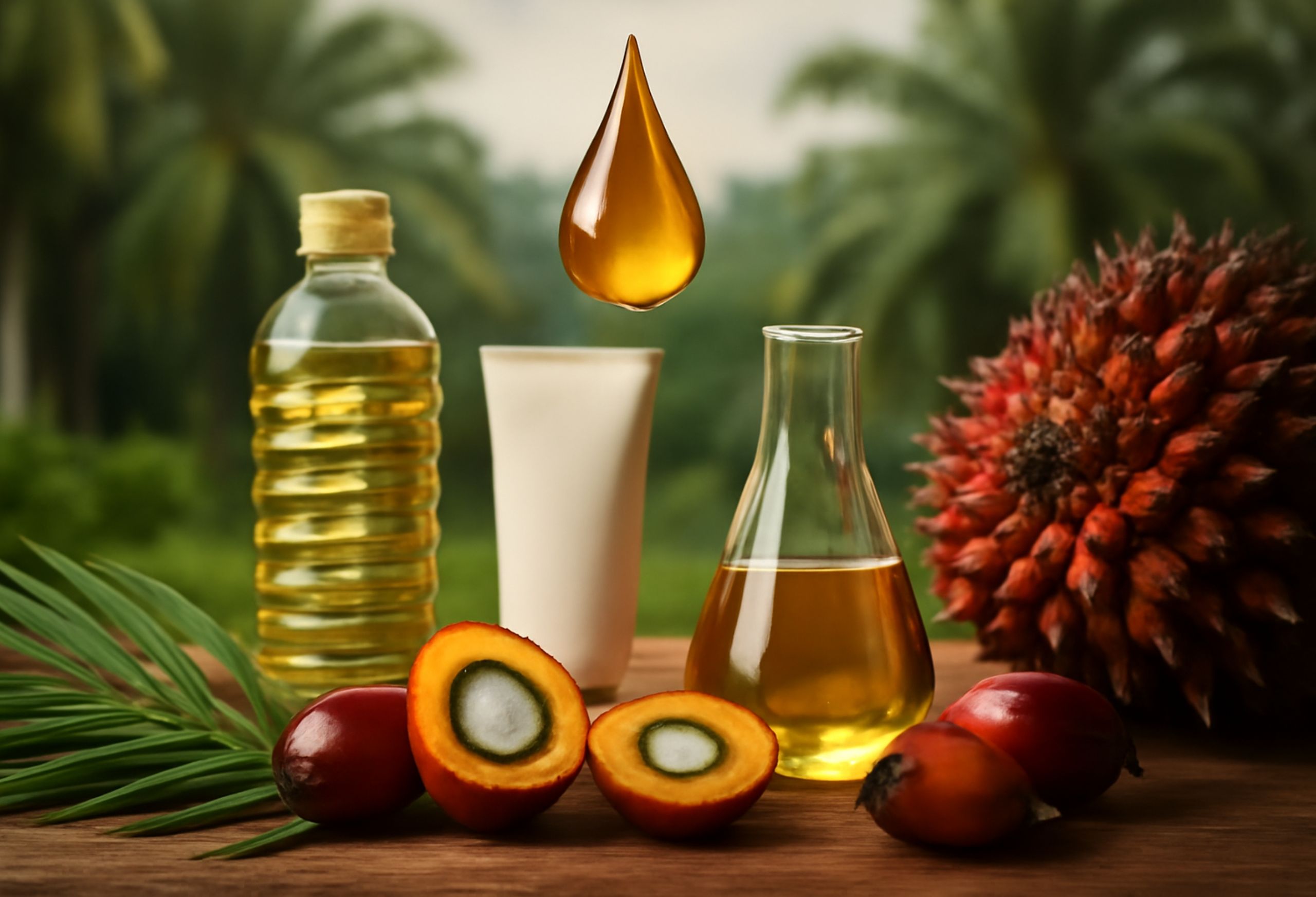
May 27, 2025502 views
A Drop of Palm Oil, A Million Opportunities: Exploring Indonesia's Downstream Potential
Indonesia is no stranger to the term downstreaming. Amid public scrutiny of commodity export policies, the government has reaffirmed its commitment: to add value to every drop of palm oil produced. Downstreaming the palm oil industry is a strategic step that must continue to be encouraged if Indonesia wants to break free from dependence on raw material exports and enter the orbit of global industrial power.
In the past decade, Indonesia has shown significant progress. According to Indonesia.go.id, there are currently more than 200 types of palm oil derivative products that have been developed, ranging from oleochemicals and processed food products to bioenergy. This number is much higher compared to only 45 products recorded in 2011. However, this figure is still relatively low compared to countries like China, which reportedly has more than 1,000 palm oil-based products. This comparison shows that there is still much untapped economic potential.
This transformation is evident not only in the number of products but also in the shift in export structure. According to a report from Sawit Indonesia, currently about 80 percent of Indonesia's palm oil exports come from downstream products. This marks a change in industry orientation from volume-based to value-based. In 2023, the palm oil sector contributed approximately IDR 450 trillion to the national economy, as quoted from VOI.id. Most of this contribution comes from processed products with high added value.
The benefits of downstreaming do not stop at the trade balance alone. Downstreaming also opens up significant opportunities for the creation of new jobs and the enhancement of local workforce skills. Based on data from the Ministry of Energy and Mineral Resources (ESDM), the downstreaming program, particularly biodiesel, has absorbed more than 11,000 workers in the off-farm sector and around 1.5 million workers in the on-farm sector throughout 2023 (ESDM, 2024). These figures do not yet include contributions from the oleochemical and processed food industries, which are also sources of employment in the regions.
In terms of foreign exchange savings, the impact of downstreaming is also very significant. The mandatory biodiesel program, especially the implementation of B35, saved the country USD 7.9 billion or approximately IDR 120 trillion in 2023 (Antaranews, 2024). This shows that strengthening the downstream industry not only increases state revenue but also reduces dependence on fossil fuel imports.
However, to optimize this potential, the quality of human resources becomes a real challenge. In the oleochemical sector, for example, a workforce with high competence in industrial chemistry and process technology is needed. Unfortunately, Indonesia still lags behind Malaysia in terms of human resource readiness and research. According to HaiSawit (2024), Malaysia has developed more than 260 types of palm oil derivative products, while Indonesia has only reached 179 types of products. This difference indicates that besides infrastructure and regulations, human resource readiness is a key factor in the success of downstreaming.
In addition to human resource challenges, other obstacles come from regulations that often overlap or change rapidly. This uncertainty makes industry players cautious in making long-term investment decisions. On the other hand, the availability of research and processing facilities in palm oil-producing areas is also still inadequate.
Support for small and medium enterprises (SMEs) in the downstream supply chain is also not yet optimal. Yet SMEs can act as engines for product diversification, while also strengthening domestic market penetration. By involving them, downstreaming becomes not only a large industrial project but also an inclusive and equitable economic movement.
If Indonesia is serious about making the palm oil industry a pillar of economic sovereignty, then downstreaming must be implemented comprehensively and sustainably. This is not just about increasing the number of processed products, but also about strengthening the industrial ecosystem from upstream to downstream. The government, private sector, research institutions, and society must move in unison.
Comparing with China or even Malaysia is not just about discussing competition, but also a reflection of the vast potential that remains untapped in the country. With the natural resource wealth it possesses, Indonesia actually has more than enough capital to become a dominant player in the palm oil-based industry. ()