← News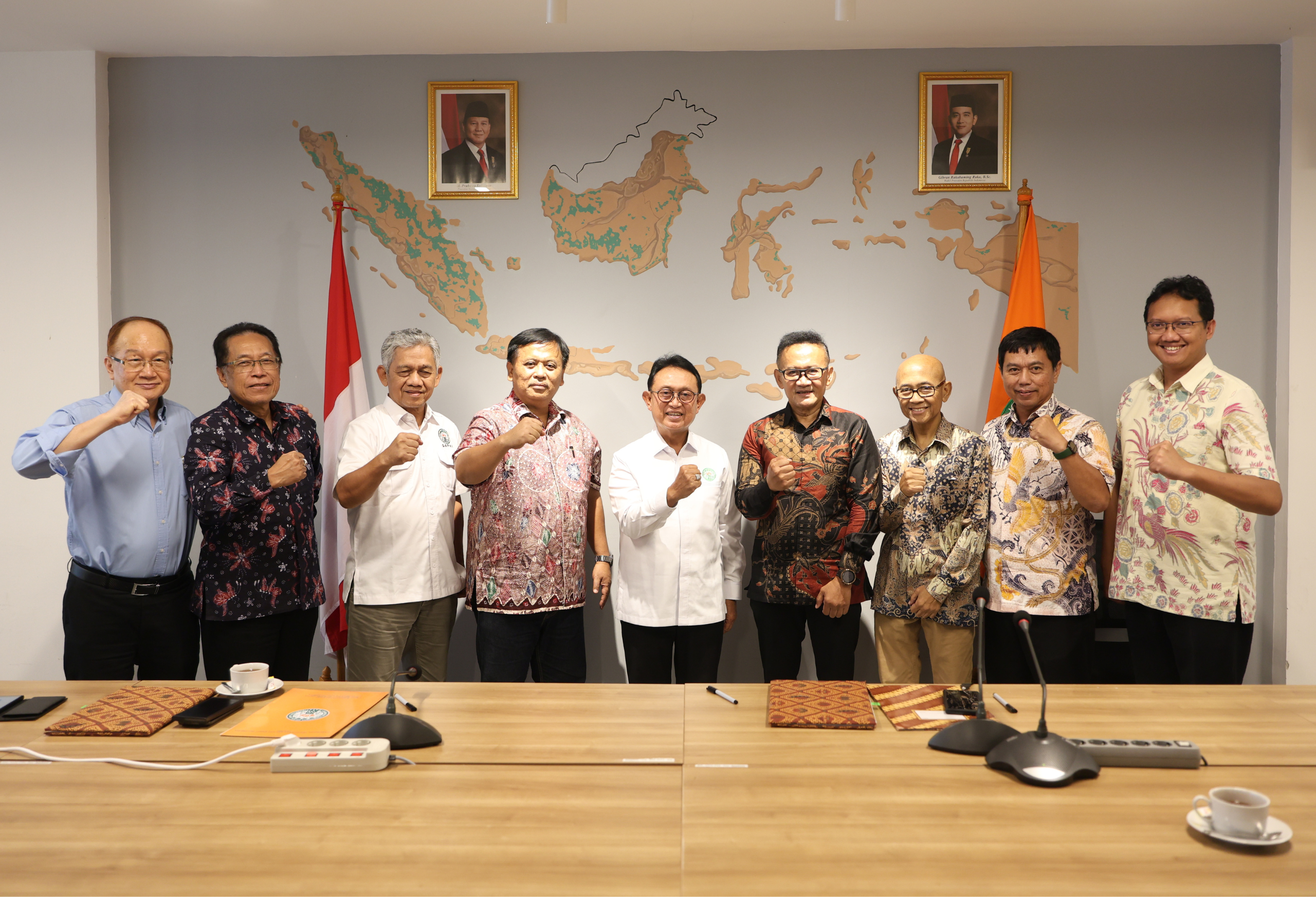
June 19, 2025318 views
IPOSS-GAPKI Synergy: Boosting Productivity and Reforming Palm Oil Governance
The oil palm industry is one of the backbones of Indonesia's economy. In addition to contributing a significant amount of foreign exchange, this sector also absorbs millions of workers and drives the economy in various regions. However, amid global pressures and internal challenges such as declining productivity and sustainability demands, collaboration becomes the key to maintaining the competitiveness of this industry.
Addressing this need, the Indonesian Palm Oil Strategic Studies Center (IPOSS) and the Indonesian Palm Oil Association (GAPKI) officially signed a Memorandum of Understanding (MoU) to strengthen institutional synergy and enhance human resource capacity on Tuesday, June 17, 2025, at the GAPKI office in Jakarta.
In his remarks, the Chairman of IPOSS, Nanang Hendarsah, expressed appreciation to GAPKI for the trust and synergy established. He emphasized that this collaboration is not just ceremonial but a starting point for presenting strong, resilient, and globally competitive industry policies and practices. The signing event was filled with a collaborative spirit, reflecting the commitment of both parties to fight for a more resilient future for Indonesian palm oil.
IPOSS serves as an institution focused on strategic research, public communication, and data-driven policy advocacy. Meanwhile, GAPKI, as an association of palm oil companies in Indonesia, has long represented the interests of business actors at the national and international levels. This collaboration is proof that a knowledge-based approach and industry experience can mutually strengthen each other.
Responding to this, the Chairman of GAPKI, Eddy Martono, emphasized that this signing is an important strategic step for the sustainability of Indonesia's palm oil industry. "I believe this moment is an important strategic step for the sustainability of Indonesian palm oil. As global challenges regarding the sustainability of the palm oil industry increase, GAPKI recognizes the importance of cross-institutional collaboration to strengthen its position," he said.
As we know, one of the major challenges addressed in this cooperation is the decline in oil palm productivity that has occurred in recent years. Declining productivity not only affects business efficiency but also impacts Indonesia's competitiveness as the world's largest palm oil producer.
In a special interview with IPOSS, the Chairman of GAPKI, Eddy Martono, revealed that increasing production and productivity must be the top priority. He mentioned that there are several key strategies that stakeholders need to implement immediately.
"To increase oil palm production and productivity, several efforts need to be made, including ensuring that the Smallholder Oil Palm Replanting (PSR) program can run according to its target. In addition, the replanting of large plantations must also be encouraged, using superior clones resistant to ganoderma disease, and implementing good cultivation practices such as GAP (Good Agricultural Practices) and GMP (Good Manufacturing Practices)," said Eddy.
Through this memorandum of understanding, GAPKI and IPOSS hope to promote real, data-driven solutions, accompanied by strengthening institutional capacity at the grassroots level. Moreover, amid global regulatory pressures such as the EUDR (EU Deforestation Regulation) and trade barriers from partner countries, the national palm oil industry needs a stronger bargaining position and a sustainability narrative supported by evidence and real achievements.
This collaborative step is proof that the Indonesian palm oil industry does not stand alone. With the support of research, policy advocacy, and inter-institutional synergy, Indonesian palm oil is expected not only to survive but also to grow into a resilient, inclusive, and sustainable industry model in the future. ()