← News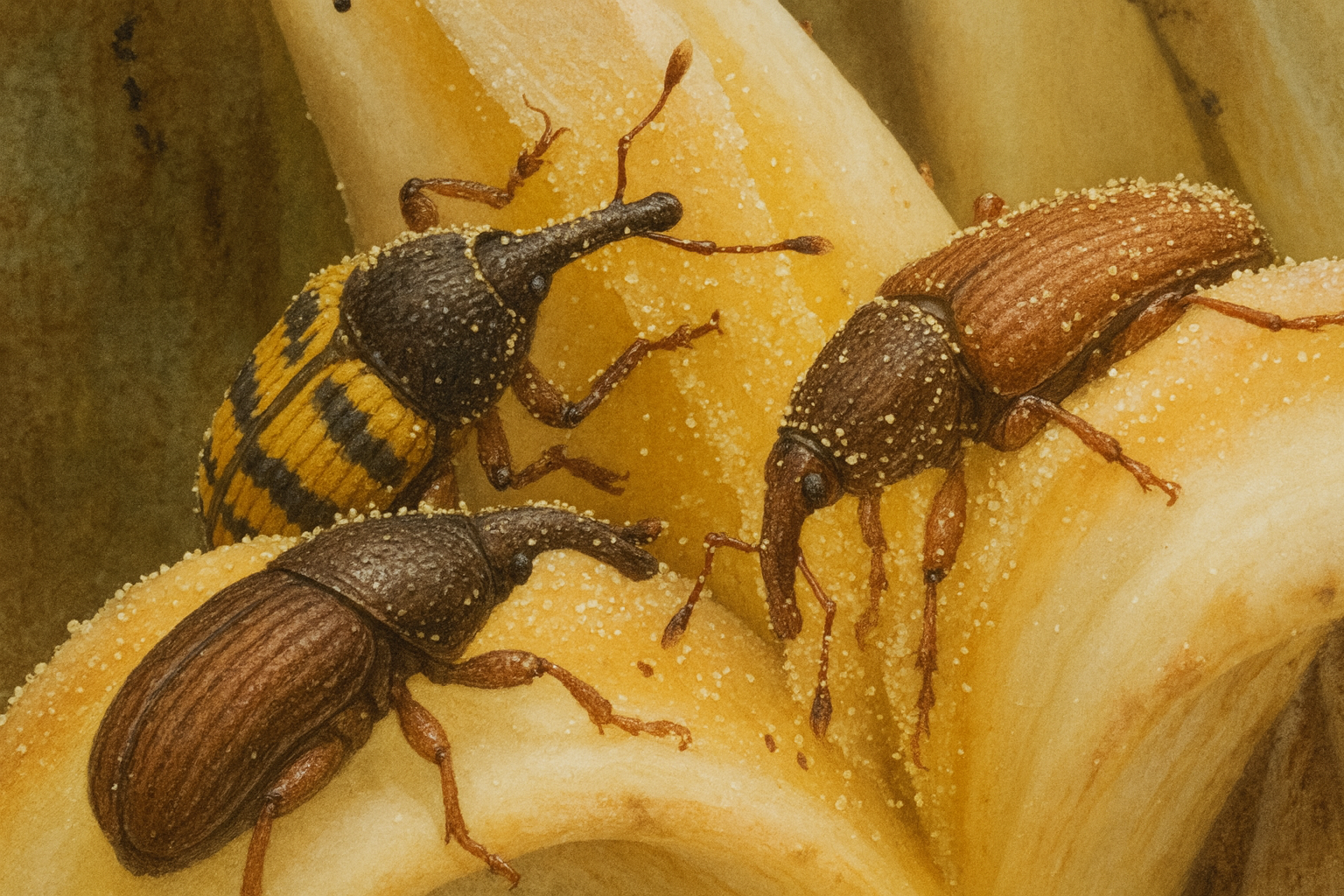
October 30, 2025455 views
Three Pollinating Insects from Tanzania Strengthen Oil Palm Productivity Research
Efforts to enhance national oil palm productivity continue to be developed through scientific approaches. One such effort is being conducted by the Palm Oil Research Center (PPKS), which is currently studying three types of pollinating insects from Tanzania. This study is expected to deepen the understanding of biological factors affecting palm oil production in Indonesia. PPKS researcher, Agus Eko Prasetyo, presented the initial research findings at the Talkshow Karantina Day 2025 themed “From Quarantine for Sustainable Palm Oil: Supporting Indonesia's Food and Energy Security”, Friday (10/24/2025). In his presentation, as quoted from InfoSAWIT, Agus explained that the three types of insects being studied are Elaeidobius subvittatus, Elaeidobius plagiatus, and Elaeidobius kamerunicus — all originating from Tanzania and having potential as natural pollinators of oil palm plants. According to Agus, this research focuses on the interaction between insects and oil palm flowers. “We continue to test the compatibility between insects and palm flowers. This process is not easy, as each species has different characteristics and responses to the chemical compounds released by the plant,” he said. He explained that most oil palm pollinating insects are not attracted to nectar, but rather to the aroma and chemical compounds (volatile substances) produced by the flowers, especially at certain phases of the flowering process. These substances act as natural signals guiding insects to come and pollinate. “Interestingly, our observations show that insects visit female flowers more than male flowers,” said Agus. “The comparison is quite significant, about one to two in male flowers, while in female flowers it can reach one to four.” This tendency opens opportunities for further research to understand how insect preferences for female flowers can affect pollination effectiveness and fruit formation. Agus also suspects there is a relationship between the nutritional content of female flowers and the life cycle of pollinating insects. “If this relationship can be understood more deeply, we can sustainably increase the population of natural pollinating insects in oil palm plantations,” he explained. In addition to observing oil palm flowers, PPKS also compares insect behavior on several other types of palm plants. Preliminary results show that oil palm flowers have a unique attraction for natural pollinating insects. This finding confirms that the oil palm ecosystem has adaptive mechanisms that allow a balance between productivity and environmental sustainability. The research conducted by PPKS is part of a long-term strategy to increase the efficiency of national palm oil production without the need to expand land. By understanding the behavior and biology of natural pollinators, the palm oil industry can optimize harvests while maintaining the sustainability of the surrounding ecosystem. “We hope this research can provide a scientific basis for more environmentally friendly plantation management,” said Agus. He also added that this pollinator study is not only important for productivity but also for the resilience of the insect population itself. If the pollinator population can be maintained through good habitat management, then the relationship between plants and insects can be mutually beneficial in the long term. “This pollination biology research will help the palm oil industry understand how nature works for us,” he emphasized. “The goal is not only to increase yields but also to ensure an efficient, balanced, and sustainable agricultural system.” PPKS's initiative underscores the importance of science in supporting the transformation of Indonesia's palm oil industry — from one that initially focused solely on production to an industry that also prioritizes sustainability based on scientific knowledge.