← Activities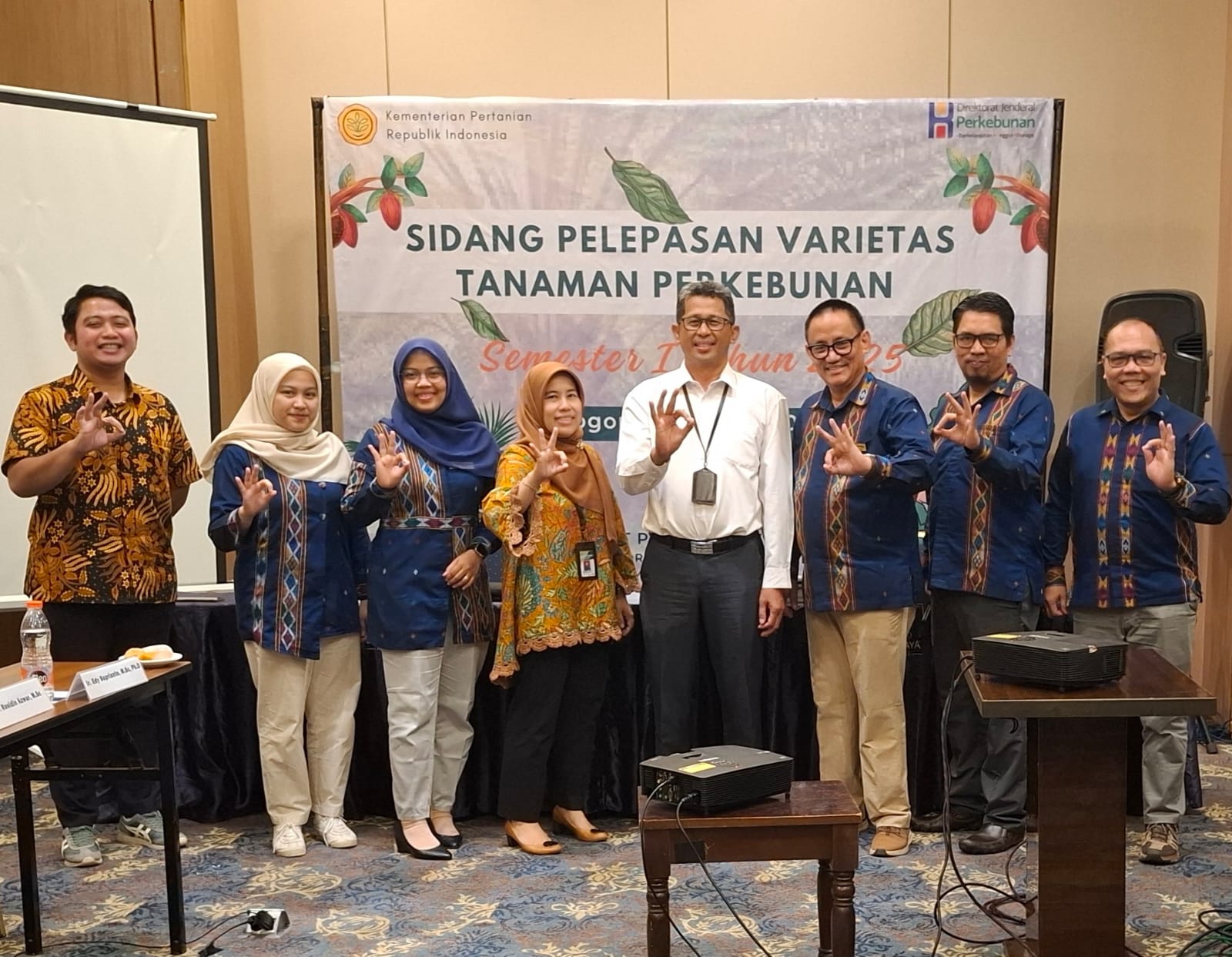
May 20, 2025192 views
Released, Oil Palm Variety Producing Male Flowers
The release of superior oil palm varieties by the Variety Assessment Team (TPV) of Plantation Crops, Ministry of Agriculture (Kementan), on May 14–15, 2025, introduced several new breakthroughs in efforts to enhance national palm oil productivity. One focus of this release is the presence of varieties with dominant characteristics in producing male flowers, which are considered important in supporting successful pollination and fruit formation in oil palm plants.
Quoted from Hortus Magazine, the Chairperson of the TPV of Plantation Crops, Ebi Rulianti, who also serves as the Director of Plantation Seedling, Kementan, emphasized that the new varieties are the result of proposals from plantation actors that have undergone strict selection and assessment according to applicable standards.
“Varieties with abundant male flowers can be utilized to increase plantation productivity through improved pollination systems,” she stated.
The varieties released alongside five other superior varieties have brought new enthusiasm for increasing national palm oil productivity. This release has become a highlight for researchers in the oil palm industry regarding the importance of varieties that can drive increased national palm oil productivity achievements.
According to Senior Researcher at Indonesia Palm Oil Strategic Studies (IPOSS), Dimas H. Pamungkas, the release of oil palm varieties with abundant male flowers is a strategic step that is highly relevant to current field needs, especially in addressing productivity challenges in the early phase of plant production.
“We highly appreciate this step. So far, the limitation of male flowers has been a real obstacle in the pollination process, especially in the early production phase. Many tenera varieties indeed have high production potential, but not a few tend to be lacking in producing male flowers. This can certainly be overcome by adding male flower-producing plants in the same plantation block location,” he explained.
The presence of varieties dominant in male flowers will be able to address the issue of low pollination effectiveness and fruit formation (fruitset) that has been the root cause of suboptimal production results. Oil palm varieties with abundant male flower characteristics will be a much-needed solution for oil palm smallholders today, especially for participants in the Smallholder Oil Palm Replanting (PSR) program.
Moreover, Dimas also highlighted the ecological impact of increasing the number of male flowers in plantation areas, such as the increase in the population of Elaeidobius kamerunicus, the main pollinating insect in the oil palm ecosystem.
“With sufficient male flowers, pollinating insects will have a more stable food source and habitat. This will strengthen the effectiveness of natural pollination and increase farmers' harvest yields. We hope that with varieties like this, palm oil productivity can reach more than 18 tons per hectare per year at the age of 3 years and continue to increase, even reaching more than 28 tons per hectare per year from the age of 5 years, of course with the support of good cultivation practices,” he added.
The release of such superior varieties demonstrates the importance of collaboration between plant breeders, industry players, and policymakers in driving innovations relevant to field needs. Future variety development is expected to focus not only on yield potential but also on reproductive effectiveness, disease resistance, and adaptation to climate change.
“In the future, we need to encourage more varieties developed with a holistic approach—considering the balance between yield potential, plant reproductive effectiveness, disease resistance, and adaptability to climate change. Innovation oriented towards field needs like this will be key to a competitive and sustainable palm oil industry future,” he concluded. ()