← Activities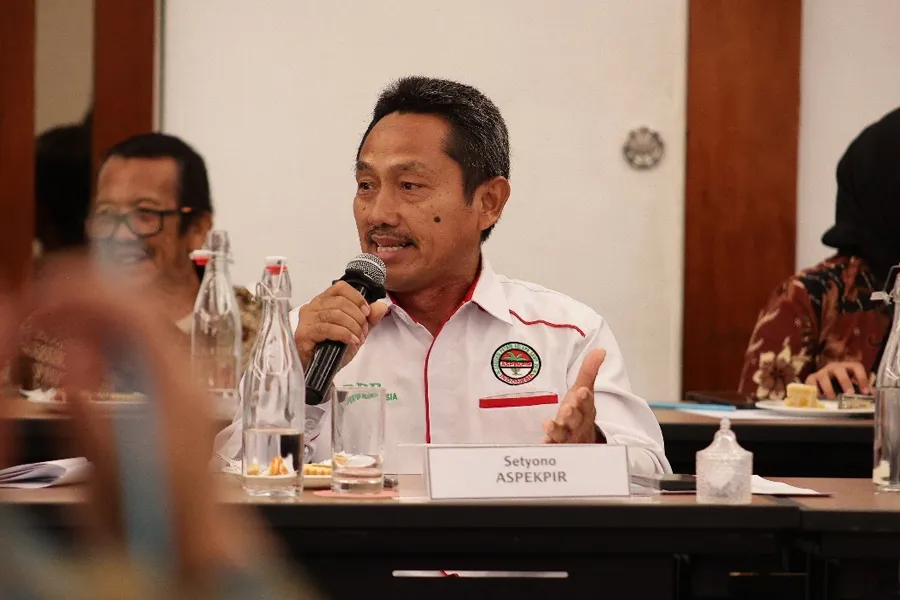
May 6, 2025529 views
Farmers Appreciate PSR Amount, But Demand Process Simplification
As is known, the Smallholder Oil Palm Replanting (PSR) Program is one of the Government's efforts to encourage increased productivity of smallholder oil palm plantations in Indonesia. This program, launched in 2017, was created for oil palm farmers to replace old and no longer productive plants with superior quality seedlings. The Government now provides assistance of IDR 60 million per hectare to support the replanting of smallholder oil palm plantations through PSR. This government assistance includes the purchase of certified superior seedlings, covering garden maintenance costs, and providing technical assistance from the local plantation office. However, without a simple verification and administration system, the potential of this assistance has not been fully felt evenly by farmers. IPOSS had the opportunity to interview the Chairman of the Indonesian PIR Oil Palm Farmers Association (Aspekpir), Setiyono, during the FGD on PSR (22/4/25), who stated that overall, the government's support for smallholder oil palm farmers is quite good and shows serious attention to this sector. “The Government is very concerned and attentive to this issue. There used to be a revitalization program, now there is PSR. The government's support is actually very good,” said Setiyono. However, he also emphasized the importance of simplification in the process and requirements for program submission. According to him, many oil palm farmers experience difficulties because the procedures are considered too complicated and “unfriendly” for them. “Farmers want things to be simple, especially those in plasma. The land is clear, the legality is also clear, although some are in forest areas. Well, it is the Government's task to resolve (the area issue),” he added. The issue of overlapping land and forest area claims often becomes a challenge in the field. This is not a new issue, but it remains a major obstacle in the distribution process of the Smallholder Oil Palm Replanting (PSR) Program. Data from BPDB shows that annually, PSR achievements only reach about 50,000 hectares, which is less than 30% of the annual target of 180,000 hectares. Another major difficulty often lies in the administrative aspect, particularly related to land legality. In fact, plasma farmers generally have collaborated with core companies and have complete and legally valid documents. Unfortunately, if part of their land is within forest areas, the verification process can become complicated and time-consuming. This issue is like a paradox: although there is goodwill to increase the productivity of smallholder oil palm, without better communication and coordination between the government and farmers, this program will remain stagnant. Without process simplification and solutions to land issues, the PSR program may struggle to achieve its goals. And without PSR, the performance of the national oil palm industry could deteriorate, as low productivity will continue to hinder competitiveness in the global market. Setiyono hopes that in the future, there will be a comprehensive system improvement, including active assistance from regional plantation offices. With more open communication between farmers and the government, and simplification of bureaucracy, PSR is expected to become a real solution in strengthening the sustainability of the national oil palm industry based on smallholders. ()