Europe's Quest for 'Independence': Analyzing Ursula von der Leyen's Speech in Davos
By: Yuri O. Thamrin
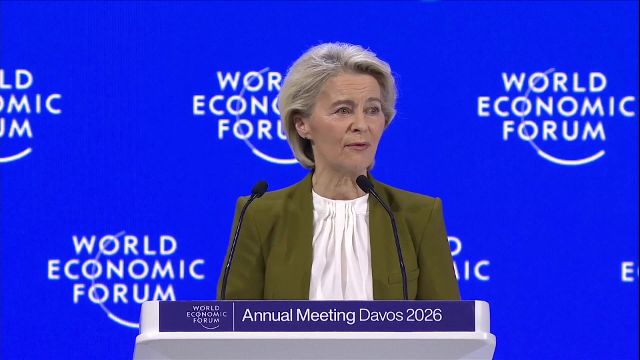
/wp:paragraph wp:paragraphThe special address by European Commission President Ursula von der Leyen at the World Economic Forum (WEF) in Davos, January 21, 2026, drew attention not only for its content but also for the implicit discontent clearly felt towards the political direction of the United States in the Trump 2.0 era. Amid a world that is increasingly transactional, full of geopolitical pressures, and weakening multilateralism, this speech reflects the European Union's aspiration to be truly “independent” strategically from the United States—in terms of economy, technology, energy, and security.
/wp:paragraph wp:paragraphThe question is: how should we interpret this speech? What are the opportunities and challenges facing the European Union going forward? And equally important, what are the implications for Indonesia, especially regarding strategic commodities like oil palm?
/wp:paragraph wp:paragraphEurope and the Ambition of Strategic Autonomy
/wp:paragraph wp:paragraphVon der Leyen's speech marks the European Union's effort to position itself as an “independent power” (strategic autonomy) amid an increasingly harsh global landscape. The main message is not merely normative optimism but a redefinition of the European Union's role.
/wp:paragraph wp:paragraphIf the EU has so far been known as a normative power—a guardian of values, rules, and multilateralism—Europe now wants to emerge as a more protective, selective, and realistic actor in defending its own interests. Values remain important, but they no longer stand alone. They are now complemented by economic shields, industrial policies, and strategic protection.
/wp:paragraph wp:paragraphImplicitly, this speech is a response to three major issues: the resurgence of U.S. economic nationalism, the fragmentation of the global order, and the fragility of the free trade regime that once underpinned Europe's prosperity.
/wp:paragraph wp:paragraphOpportunities for the European Union
/wp:paragraph wp:paragraphFirst, this speech opens up opportunities for internal consolidation within the European Union. The push for joint industrial, defense, energy, and technology policies has the potential to strengthen the EU's cohesion as a bloc. This ambition is intended to reduce dependence on the United States and China—a significant step for a region that has relied on security umbrellas and external markets for decades.
/wp:paragraph wp:paragraphSecond, the European Union is trying to position itself as a “third pole” in global rivalry. On one side is the increasingly transactional United States, and on the other is the highly state-driven China. The EU wants to emerge as a stable, predictable, and rule-based alternative. This opens up new diplomatic space, including broader partnerships with Global South countries.
/wp:paragraph wp:paragraphThird, the values plus leverage approach gives the European Union new bargaining power in trade and climate policy. The EU is no longer merely lecturing on standards but also using market access, regulations, and industrial policies as negotiation tools.
/wp:paragraph wp:paragraphChallenges Lurking
/wp:paragraph wp:paragraphHowever, this ambition is not without risks.
/wp:paragraph wp:paragraphThe first challenge is the contradiction between values and interests. The rhetoric of openness often clashes with green protectionism practices, domestic industry subsidies, and strict regulations like EUDR and CBAM. In the eyes of many developing countries, this can easily be perceived as double standards.
/wp:paragraph wp:paragraphSecond, the internal fragmentation of the European Union itself. Not all member states have the same interests and levels of readiness. Differences between Western, Eastern, and Southern Europe could weaken the implementation of strategic ambitions that look great on paper.
/wp:paragraph wp:paragraphThird, there is a risk of alienating Global South partners. If Europe's approach feels patronizing and insensitive to the development realities of developing countries, the strategic autonomy strategy could widen the gap rather than build equal partnerships.
/wp:paragraph wp:paragraphImplications for Indonesia and Oil Palm
/wp:paragraph wp:paragraphFor Indonesia, this speech should be read clearly and without illusions. A more “independent” European Union also means a more protective European Union. In this context, strategic commodities like oil palm will remain under strict scrutiny—in the name of the environment, climate, and governance.
/wp:paragraph wp:paragraphHowever, the shift in the EU's direction also opens up opportunities. If Europe wants to build new, more balanced partnerships with the Global South, then Indonesia needs to shift its position from being a regulatory object to a strategic partner. This requires more proactive, data-driven, and confident diplomacy: demonstrating real progress in palm oil sustainability, contributions to global energy and food security, and Indonesia's role in regional stability.
/wp:paragraph wp:paragraphIssues like EUDR should not only be debated as trade barriers but also negotiated within the broader framework of economic-political relations, including IEU–CEPA, energy transition, and global supply chain security.
/wp:paragraph wp:paragraphConclusion
/wp:paragraph wp:paragraphUrsula von der Leyen's speech reflects a geopolitically more mature but also more defensive European Union. This is no longer the Europe that naively believes free markets will solve all problems. The world has changed, and Europe is trying to adapt.
/wp:paragraph wp:paragraphHowever, the success of this ambition heavily depends on one crucial factor: whether the European Union can align its idealism with realism without losing its moral credibility. For Indonesia, the challenge is to carefully interpret this change—not with an emotional reaction, but with a calm, wise strategy based on long-term national interests.
Thamrin, Y. O. (2026). Europe's Quest for 'Independence': Analyzing Ursula von der Leyen's Speech in Davos. IPOSS Researcher Opinion, OP-2026-I-001. Indonesia Palm Oil Strategic Studies. https://iposs.co.id/en/opini/eropa-yang-ingin-merdeka-membaca-pidato-ursula-von-der-leyen-di-davos