← Researcher Opinion
OP-2025-V-002
By Yuri O. Thamrin · Dewan PengawasMay 9, 2025396 views
Can Indonesia Achieve Energy Self-Sufficiency in Five Years?
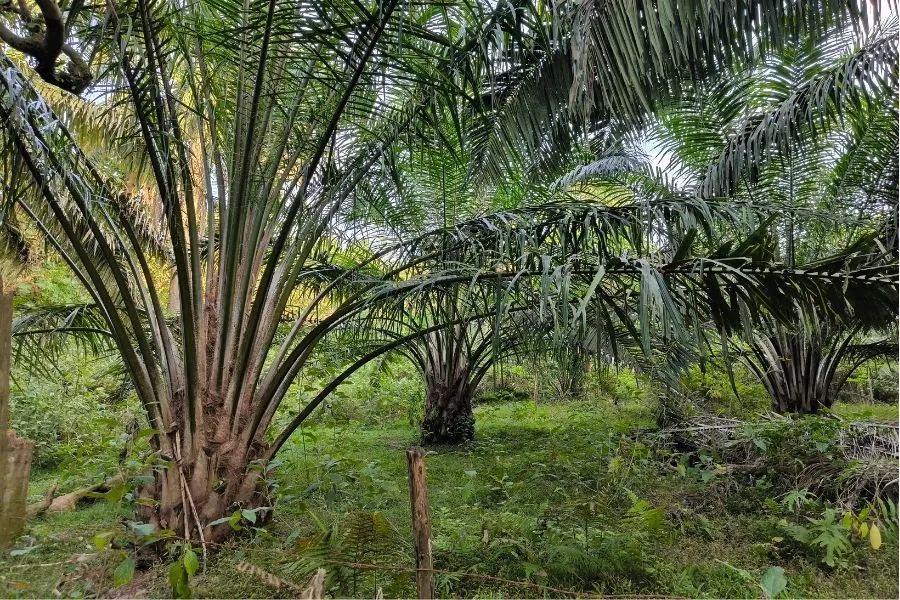
The President of Indonesia, Prabowo Subianto, expressed a grand ambition to lead Indonesia towards energy self-sufficiency within his five-year term. He conveyed this commitment while attending a gathering with retired TNI-Polri officers (May 6). Prabowo stated that Indonesia has vast resources, particularly oil palm, which can be utilized as raw material for biodiesel to replace dependence on imported fuel oil (BBM).
“It turns out that from oil palm, there are 67 products. Among them, we can make BBM from oil palm. Our country actually does not need to import BBM from anywhere,” Prabowo said in a statement.
This statement has drawn attention because it was delivered directly by the head of state, reflecting a serious commitment to efforts in building national energy independence. However, this statement also seems quite lofty, even tending to be quite challenging to implement given the current state of the bioenergy industry in Indonesia.
The implementation of the B40 program, which involves blending 40% biodiesel into fuel oil, is beginning to show signs of reaching national capacity limits. According to data from the Ministry of Energy and Mineral Resources (ESDM) in 2024, national biodiesel production has reached about 80% of the total available capacity. Findings from IPOSS indicate that the implementation of B40 has started to strain domestic raw material supplies, even forcing a reduction in palm oil export volumes, which have been a mainstay of the country's foreign exchange earnings. B40 is considered the current optimum point, as exceeding it risks causing serious disruptions to the palm oil industry ecosystem, both in terms of feedstock availability and financing.
According to IPOSS research, the financing scheme that has so far relied on funds from the Palm Oil Plantation Fund Management Agency (BPDPKS) is projected to be insufficient if the blend is increased above B40. Even in a full B40 scenario in 2025, BPDPKS is expected to experience a budget deficit of more than IDR 23 trillion, while implementing B50 could lead to a shortfall of up to IDR 34 trillion. This deficit is primarily triggered by declining revenues from Export Levy (PE) due to reduced CPO export volumes, as more CPO is diverted for domestic needs, while on the other hand, subsidy needs continue to increase along with rising domestic consumption.
The government indeed continues to promote the use of biodiesel as a more sustainable energy alternative. IPOSS estimates that to achieve B100, Indonesia needs to significantly increase CPO production, even doubling the current capacity. The installed capacity of national biodiesel production is currently only about 17.8 million kiloliters per year, or only about 51% of the total requirement if B100 is fully implemented, assuming national diesel consumption is around 35 million kiloliters per year. This means that national production capacity is still inadequate to meet this target. Making the biodiesel program above B40 very difficult to implement in the near future without major reforms in subsidy schemes and infrastructure investment.
On the other hand, from the production aspect, Indonesia indeed shows positive achievements. According to official data from the Ministry of Energy and Mineral Resources (ESDM), national biodiesel production throughout 2024 reached more than 13 million kiloliters. This figure exceeds the government's target of 11.3 million kiloliters, and most of it is distributed for domestic consumption. The performance of national biodiesel is indeed commendable, but this achievement is not yet commensurate with the scale of national energy needs, especially for the transportation and industrial sectors.
Furthermore, there is a fundamental issue from the upstream side: many smallholder oil palm plantations currently consist of old plants whose productivity continues to decline. To address this, replanting programs are an important step, but this process takes at least 3 to 4 years before the plants can produce optimally again. In this context, the discourse on energy self-sufficiency within five years is indeed an ambitious target. Although this policy direction needs support, its realization on the ground will require a much more comprehensive strategy and a considerable amount of time.
President Prabowo's statement is an important signal that the government wants to end dependence on BBM imports. However, to turn this ambition into reality, there needs to be careful planning, involvement of many sectors, and an awareness that the energy transition is a long process that cannot be completed in a short time. We should support this policy direction, but also need to be realistic and critical in viewing its roadmap.
How to Cite
Thamrin, Y. O. (2025). Can Indonesia Achieve Energy Self-Sufficiency in Five Years?. IPOSS Researcher Opinion, OP-2025-V-002. Indonesia Palm Oil Strategic Studies. https://iposs.co.id/en/opini/mampukah-indonesia-swasembada-energi-dalam-lima-tahun
NumberOP-2025-V-002PublishedMay 9, 2025DOI-