Caring for the Goose That Lays Golden Eggs

By Yuri O. Thamrin
Oil palm is often perceived as a commodity that easily generates profits. However, in plantation practice, palm oil productivity heavily depends on disciplined garden management, sustainable investment, and a healthy business ecosystem.
/wp:paragraph wp:paragraphIn many public discussions, oil palm is often depicted as a commodity that easily generates money. The image that emerges is often simple: plant the tree, wait a few years, and then the harvest will come on its own. Such a narrative may sound appealing, but it does not fully reflect the reality on the ground.
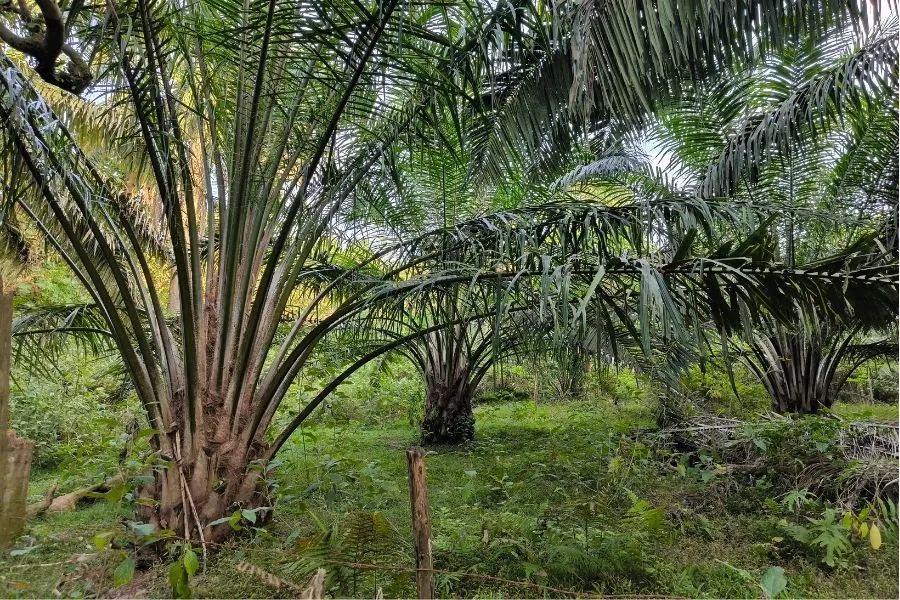
/wp:paragraph wp:paragraphIn plantation practice, oil palm is actually a plant that demands serious attention and consistent management. Its productivity does not come automatically. It is the result of a long process involving the selection of superior seeds, regular fertilization, good water management, and disciplined garden maintenance.
/wp:paragraph wp:paragraphPlantation Reality
/wp:paragraph wp:paragraphPlantation practitioners often remind us that the success of oil palm is more determined by the quality of management than merely the size of the land. The same tree, planted in the same area, can yield very different productivity depending on how the garden is maintained.
/wp:paragraph wp:paragraphThis is where the technical reality of plantations often escapes public attention. Oil palm requires sufficient nutrition and proper fertilization. Without it, plant growth will be stunted and harvest yields will decrease. Additionally, the garden must also be protected from various pests and plant diseases.
/wp:paragraph wp:paragraphOne of the diseases that is a serious concern in oil palm plantations is basal stem rot caused by the Ganoderma fungus. This disease can slowly damage the tree and significantly reduce garden productivity. Its handling is not simple and often requires substantial costs and meticulous garden management.
/wp:paragraph wp:paragraphIn other words, palm oil productivity is not something that comes on its own. It is the result of continuous attention, significant investment, and high management discipline.
/wp:paragraph wp:paragraphChallenges for Smallholders
/wp:paragraph wp:paragraphOn the other hand, most oil palm plantations in Indonesia are managed by smallholders who work with limited resources. They often face various obstacles, ranging from access to superior seeds, limited capital to purchase fertilizers, to limited access to technical knowledge about good garden management.
/wp:paragraph wp:paragraphAs a result, the productivity of smallholder gardens is often lower compared to professionally managed gardens. Yet, the potential of the plants they grow is essentially the same. The difference lies more in the ability to care for and manage the garden optimally.
/wp:paragraph wp:paragraphThis shows that the success of oil palm is not only determined by natural factors but also by management capacity. Plantations are essentially a long-term activity that requires agronomic management, stable financing, and adequate technical knowledge.
/wp:paragraph wp:paragraphThe Importance of a Business Ecosystem
/wp:paragraph wp:paragraphIn this context, plantation companies often play an important role in maintaining garden management standards and plant productivity. With greater resources, they are generally able to implement more systematic agronomic practices, from seed selection to harvest management.
/wp:paragraph wp:paragraphOn the other hand, well-managed cooperatives can also be an important means to help smallholders enhance their capacity. Through strong organizations, farmers can gain better access to financing, technology, and training.
/wp:paragraph wp:paragraphThus, the future of Indonesian palm oil essentially does not only depend on the size of the land owned but also on the quality of its management ecosystem. If management is conducted professionally and consistently, the potential of palm oil can continue to develop. Conversely, if garden maintenance weakens, productivity will gradually decline.
/wp:paragraph wp:paragraphIn the world of plantations, a decline in maintenance is rarely seen suddenly. It usually occurs gradually. A tree that is under-fertilized or not well-maintained may still stand, but its yield is no longer optimal. In the long run, such conditions can reduce the competitiveness of a commodity.
/wp:paragraph wp:paragraphMaintaining the Future of Palm Oil
/wp:paragraph wp:paragraphFor Indonesia, palm oil has a very significant economic meaning. This commodity has become one of the main supports of national exports as well as a source of livelihood for millions of families in various regions.
/wp:paragraph wp:paragraphTherefore, maintaining palm oil essentially means maintaining one of the important foundations of the national economy.
/wp:paragraph wp:paragraphPalm oil is often referred to as the "golden goose" for Indonesia. This expression is not an exaggeration when considering its contribution to foreign exchange, employment, and regional development. However, in the world of plantations, success does not come just from planting trees, but from the patience of nurturing them. A tree that is not well-maintained will not stop living immediately, but will gradually lose its productivity.
/wp:paragraph wp:paragraphThis is where the importance of viewing oil palm more realistically comes into play. It is not merely a commodity that can be left to grow on its own. It requires attention, investment, and sustainable management.
If we want this "golden goose" to continue benefiting Indonesia in the long term, it is not only the trees that need to be maintained, but also the ecosystem that allows these trees to be well cared for.
In the world of plantations, neglected trees rarely die immediately. They simply stop producing. And for a strategic commodity like palm oil, the luxury of allowing it to stop bearing fruit is something we do not have.
Thamrin, Y. O. (2026). Caring for the Goose That Lays Golden Eggs. IPOSS Researcher Opinion, OP-2026-III-007. Indonesia Palm Oil Strategic Studies. https://iposs.co.id/en/opini/merawat-angsa-bertelur-emas