Abundant Palm Oil, Why Not Easily Replacing Soybean Meal?
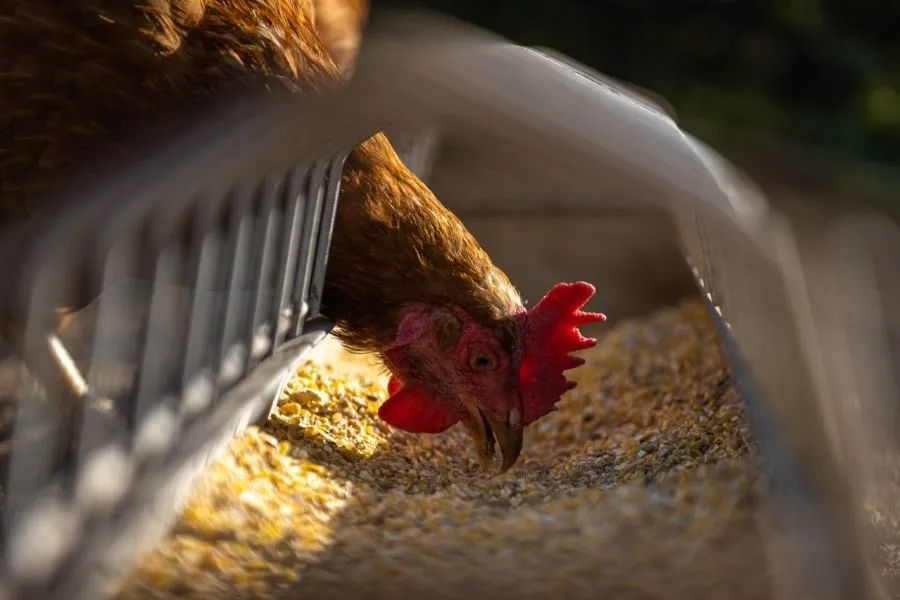
Palm kernel meal (PKM) and palm oil-based products have been used in feed formulations. Now, the question arises: to what extent can palm-based materials be expanded to partially meet the needs currently fulfilled by imported soybean meal (SBM)? The Ministry of Agriculture (Kementan) is exploring this opportunity together with BRIN and universities (InfoSAWIT, 2026).
This highlights the gap between the availability of local raw materials and their utilization in the feed industry. In the broiler feed formulation presented by Kementan, SBM accounts for about 25% of the total formulation, while in layer (egg-laying chicken) feed, it is around 20%. On the other hand, palm-based materials currently used are about 5% for PKM and 5% for CPO or palm fat in broiler formulations.
This difference makes the question of substitution not as simple as finding local materials to replace imported ones. SBM and PKM have different nutritional characteristics. SBM is an important protein source in poultry feed, while PKM has a relatively high fiber content. A study in Agricultural Policy Analysis (2024) notes that PKM contains about 14–17% protein and 12–18% crude fiber. These characteristics mean that using higher amounts of PKM requires proper formulation and processing.
Therefore, increasing the portion of palm materials is not just a matter of raising its percentage in the ration. It must be ensured that chickens still receive a balance of protein, energy, amino acids, and other nutrients without compromising livestock performance. Several studies have tested PKM processing, including through fermentation and enzyme use, to enhance its nutritional value and digestibility. The same study estimates that improved quality PKM can be used up to about 12.5% in layer chicken feed and 10% in broiler chicken feed during the grower-finisher phase.
These findings are relevant to the study currently conducted by Kementan. The use of palm-based materials, which is currently around 5%, is being studied to increase to more than 10%. However, this figure is still part of research and cannot yet be considered a proven level of SBM substitution that can be widely applied. This means the challenge is not only to prove that palm materials can be used but to determine how much can be used safely, effectively, and economically.
Testing at the regional level is also beginning to provide insights into the direction of this development. In September 2026, Kementan tested a layer chicken feed formulation based on palm kernel meal developed by the Tana Tidung Regency Government, North Kalimantan. The testing was conducted to ensure the quality and feasibility of the formulation before it is used more widely by farmers. The local government estimates that the formulation has the potential to generate efficiency of about IDR 1.8 billion per year, although this figure is still a simulation and not yet realized savings (Directorate General of Livestock and Animal Health, 2026).
At this point, the issue returns to the competitiveness of local materials. The availability of PKM domestically indeed provides an opportunity, but processing costs, material quality, digestibility, logistics, and supply consistency still determine whether the material can truly compete with SBM.