Maintaining the Balance of Aviation Decarbonization

Indonesia recently hosted The Fourth Meeting of ICAO Committee on Aviation Environmental Protection (CAEP) Working Group 5 in Bali from July 6-10, 2026. This forum, which brought together more than one hundred aviation experts from around the world, discussed the future of Sustainable Aviation Fuel (SAF), projected to become the backbone of aviation decarbonization. This momentum should not only be a source of diplomatic pride but also a space for reflection on a fundamental question: is the current global governance of SAF truly accelerating decarbonization?
The world has set a clear direction for the future of aviation. Through the aspiration of Net Zero Carbon Emissions by 2050, the International Civil Aviation Organization (ICAO) is urging the international aviation sector to achieve net-zero carbon emissions by mid-century. One of its main pillars is the use of Sustainable Aviation Fuel (SAF), with ICAO even targeting SAF to contribute to a five percent reduction in international aviation carbon emissions by 2030.
However, amidst this ambition, a paradox remains. SAF is projected to be the largest contributor to aviation decarbonization by 2050. The International Air Transport Association (IATA) even estimates that around 62% of the aviation sector's emission reductions will depend on the use of SAF. Ironically, to date, global SAF production can only meet less than one percent (0.8%) of global jet fuel demand. The gap between targets and realization remains very wide.
So far, more attention has been directed towards technology development. However, various SAF production pathways are available and continue to evolve. The increasingly apparent issue now lies in the availability of raw materials, production costs, and governance regulating its utilization.
This raises a question worthy of reflection. Have the regulations currently in place truly accelerated decarbonization, or have they inadvertently slowed its achievement?
No one disputes the importance of maintaining environmental integrity. SAF must indeed be ensured not to create new issues, such as deforestation, land-use change, or increased emissions in its supply chain. Therefore, various requirements regarding traceability, certification, and life cycle analysis are essential parts of its development.
However, the goal of decarbonization is not only determined by the quality of each liter of SAF produced but also by how quickly the world can replace fossil fuels on a large scale. When requirements become increasingly complex and only a few raw materials can meet all criteria, SAF supply grows much slower than demand. The impact is felt not only by producers but also by airlines and passengers through high fuel prices and air transportation costs.
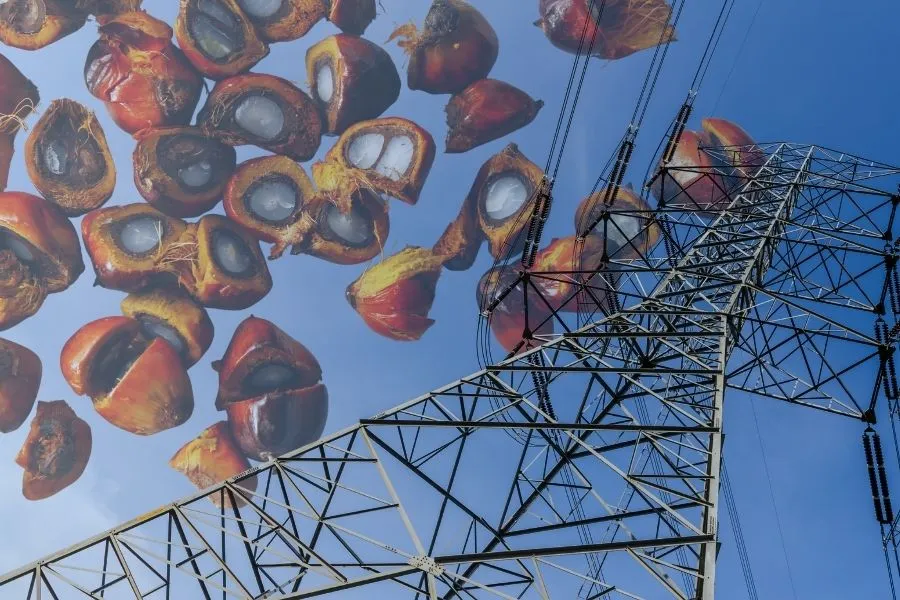
In fact, the potential for raw materials is actually available in large quantities in various parts of the world. Used cooking oil, forestry residues, agricultural waste, urban organic waste, and plantation industry residues such as Palm Oil Mill Effluent (POME), empty oil palm bunches, fibers, and shells are some of the resources that can contribute to SAF production. Some have been utilized, but others still face various obstacles, whether in the form of regulations, certification, or international trade dynamics.
This condition shows that the challenge of aviation decarbonization is no longer merely a technological issue. It has evolved into a matter of global governance. Therefore, the balance between environmental integrity and the acceleration of emission reduction becomes increasingly important. Sustainability standards must be maintained, but their implementation needs to be designed not to hinder the increase in SAF supply, which is needed to achieve emission reduction targets.
For Indonesia, hosting The Fourth Meeting of ICAO CAEP Working Group 5 should not stop at diplomatic pride. This momentum needs to be translated into concrete steps to accelerate SAF development domestically. Indonesia has various potential raw material sources, including plantation residues and waste, some of which already have default values and mature technology within the ICAO framework for life cycle emission calculations. This potential needs to be proven through real implementation, not just potential on paper.
One step that can be considered is gradually building a domestic SAF market through a mandate for its use in domestic flights. Such a policy would provide demand certainty, encourage investment, accelerate technology learning, and build implementation experience that can be Indonesia's asset in international forums. Thus, Indonesia not only offers raw materials but also demonstrates a real commitment to aviation decarbonization.
Ultimately, environmental integrity should not be opposed to the acceleration of decarbonization. Both must go hand in hand. Sustainability standards remain a foundation that cannot be ignored, but governance must also be able to accelerate the presence of low-carbon solutions on the scale the world needs. Because the measure of decarbonization success is not how complex the requirements are, but how much emissions are truly reduced.
Noegroho, H. (2026). Maintaining the Balance of Aviation Decarbonization. IPOSS Researcher Opinion, OP-2026-VII-010. Indonesia Palm Oil Strategic Studies. https://iposs.co.id/en/opini/menjaga-keseimbangan-dekarbonisasi-penerbangan