Can Palm Oil Waste Become a Regional Power Source?
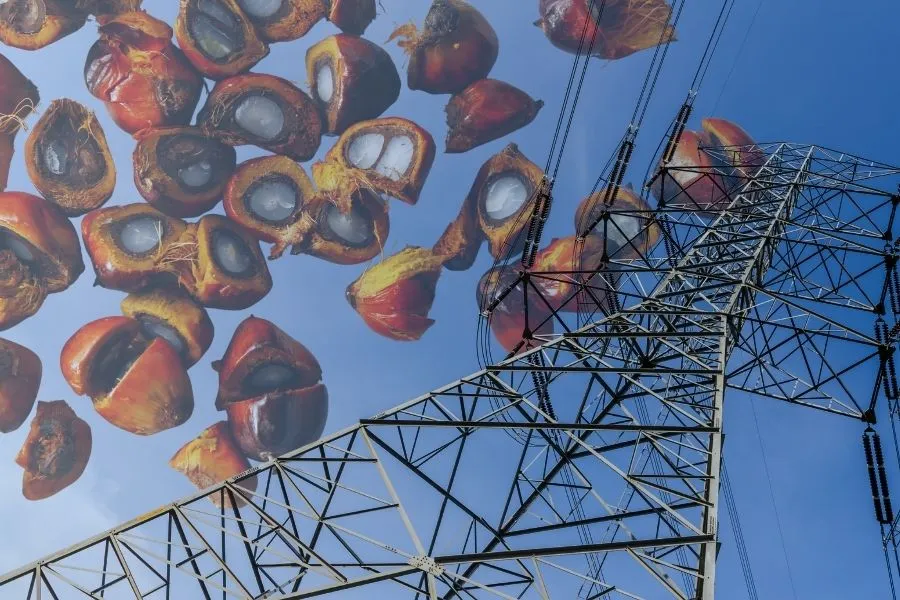
Amid efforts to strengthen regional energy resilience, West Kalimantan is beginning to view the oil palm industry as a potential local energy source. One opportunity being developed is the utilization of palm shells, a byproduct of the fresh fruit bunches (FFB) processing at palm oil mills, as a raw material for power generation.
With extensive plantation and palm oil industry activities, West Kalimantan has biomass availability that can be utilized as an alternative energy source. This utilization is not only related to energy provision but also how byproducts of the palm oil industry can provide additional economic benefits for the producing regions.
The push for the utilization of palm shells was conveyed by the Deputy Governor of West Kalimantan, Krisantus Kurniawan, as reported by Antara. He stated that palm shells, as solid waste from the crude palm oil (CPO) industry, have the potential to be used as an alternative energy source for PLN. According to him, developing the utilization of palm shells can keep the economic circulation within West Kalimantan while also impacting other sectors such as transportation and community economic activities.
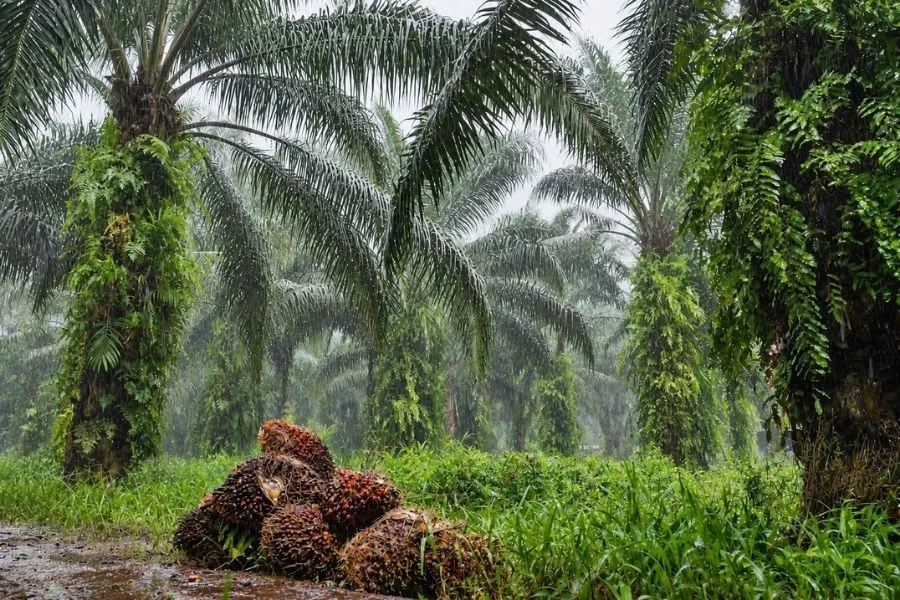
Palm shells are one of the solid biomass products generated after the separation of palm kernels at the mills. So far, most shells have been reused by the industry as boiler fuel to meet the internal energy needs of the factory. However, with the development of biomass technology, their utilization can be expanded as fuel for power plants that support energy needs around palm oil production centers.
The energy potential from the palm oil industry actually does not only come from shells. The FFB processing also produces various other byproducts such as fiber, empty fruit bunches (EFB), and palm oil mill effluent (POME). These various biomasses have different characteristics and can be utilized through appropriate technologies, ranging from direct combustion to produce thermal energy to processing into biogas.
This potential has also been extensively studied in scientific literature. Loh (2017) explains that palm biomass such as shells, fiber, EFB, and POME can be utilized through a biorefinery approach to produce energy and other value-added products. Meanwhile, Shuit et al. (2009) demonstrated that palm biomass has potential as a renewable energy source due to its large availability and ability to be converted into various forms of energy.
Nevertheless, the availability of biomass does not automatically make palm waste an easily developed electricity source. The main challenge is not only ensuring the availability of raw materials but also how to build a stable and economically viable energy supply chain. The development of biomass power plants requires investment, appropriate technology, certainty of electricity purchase, and an efficient biomass collection and distribution system.
This is important because the characteristics of palm biomass differ from the power plant fuels commonly used, such as coal and gas. The availability of shells and other byproducts follows the location of plantations and mill activities. This means that biomass-based energy development needs to be designed close to the raw material source to keep logistics costs under control and ensure energy supply.
In practice, the utilization of palm biomass as regional electricity also needs to consider its distribution scheme. If the energy is used for the internal needs of the mills, its utilization is relatively simpler. However, when electricity from biomass is intended to enter the regional electricity system, a cooperation scheme with PLN as the buyer or offtaker is required, because selling electricity to the public grid cannot be done like ordinary commodity transactions. Therefore, the certainty of electricity purchase by PLN becomes one of the important factors, but it still needs to consider the local electricity system's needs, price, reliability of biomass supply, and technical feasibility of the power plant.
For palm oil production centers like West Kalimantan, utilizing palm shells as a power source is not just about seeking alternative energy sources but also creating added value from an already developed industry. If developed with the right approach, palm biomass can be one way to strengthen regional energy resilience while promoting a more efficient and sustainable palm oil industry.