Policy Briefs and Papers
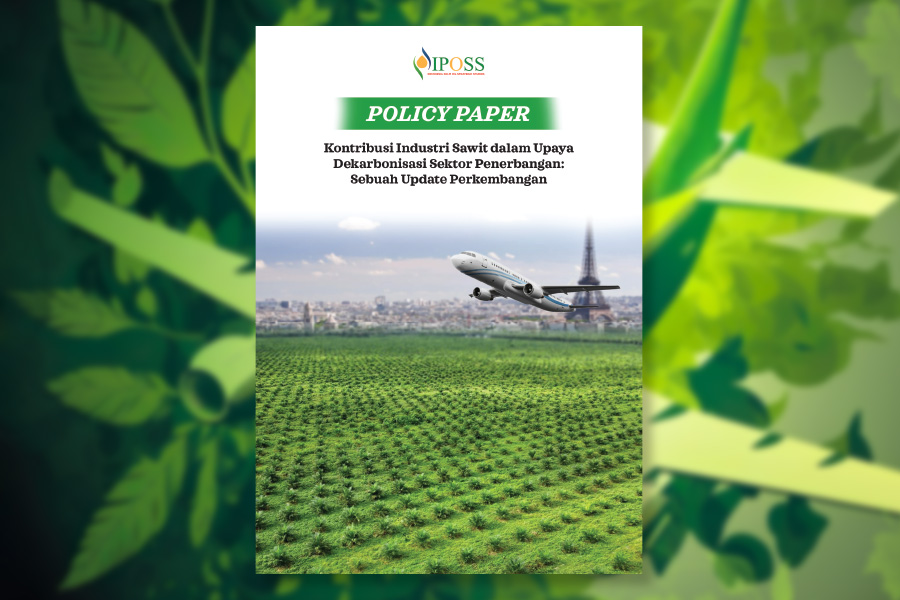
Contribution of the Palm Oil Industry in Decarbonization Efforts in the Aviation Sector: A Development Update
Published September 18, 2025
322 views
Download IndonesianEnglish version not available yet
Indonesia has a strategic potential to become the leading global producer of Sustainable Aviation Fuel (SAF), given its role as the world's largest palm oil producer. With an annual production of approximately 50 million tons of CPO and millions of tons of by-products and waste, Indonesia's palm oil industry holds abundant raw material reserves for various internationally recognized SAF conversion pathways.
There are three main technological pathways suitable for the characteristics of palm oil derivatives:
- Hydroprocessed Esters and Fatty Acids (HEFA), the most commercially mature pathway, suitable for raw materials such as CPO, PFAD, RBDPKO, POME oil, and UCO.
- Alcohol-to-Jet (ATJ), utilizing glycerol and palm biomass (such as empty fruit bunches, fronds, and trunks) fermented into bioalcohol.
- Fischer-Tropsch (FT), converting palm biomass through gasification into syngas, then synthesizing it into high-quality jet fuel.
Read the report
More from Policy Briefs and Papers
Policy Briefs and Papers
Governance and Trade of Used Cooking Oil (UCO) in Supporting Renewable Energy Program in Indonesia
September 18, 2025
Policy Briefs and Papers
Incentive Strategy to Strengthen the Domestic UCO Market in Efforts to Support the National Sustainable Aviation Fuel (SAF) Industry
September 18, 2025
Policy Briefs and Papers
Akselerasi Program Peremajaan Sawit Rakyat (PSR) di Indonesia: Tantangan dan Peluang
September 18, 2025